

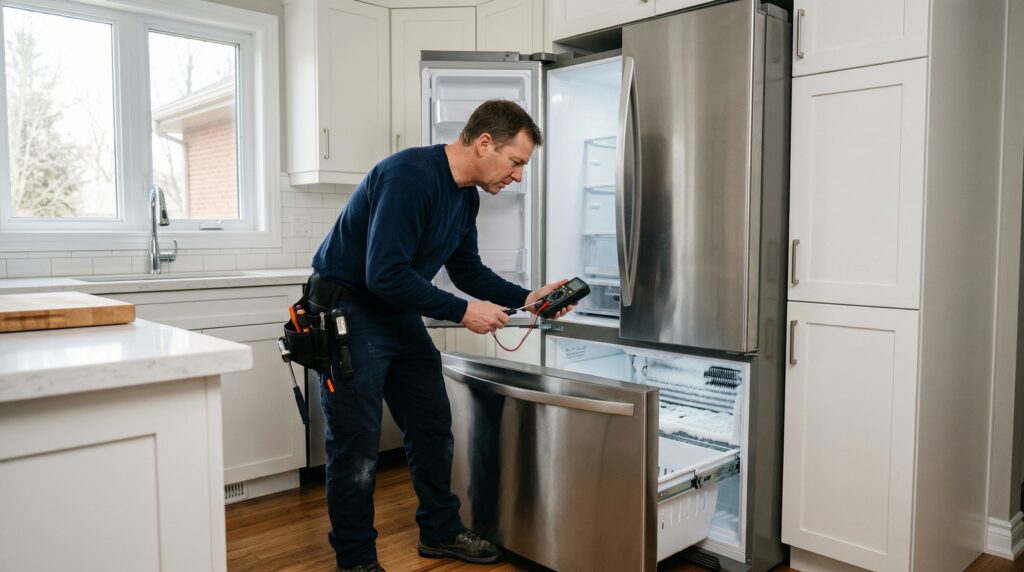
If you live anywhere from Old North to Byron and you keep finding a sheet of ice forming on the back wall of your refrigerator, you are not imagining it and you are not alone. We see this exact problem every spring across London Ontario, and it almost always traces back to one of four root causes. The good news is that none of them require a new fridge. Most are a one-visit repair if you catch them early. Here is how a working London appliance technician diagnoses fridge icing and what each fix actually costs in 2026. If you would rather skip the troubleshooting, refrigerator repair in London is a same-week call from our shop on Wharncliffe.
What is actually happening when your fridge ices up
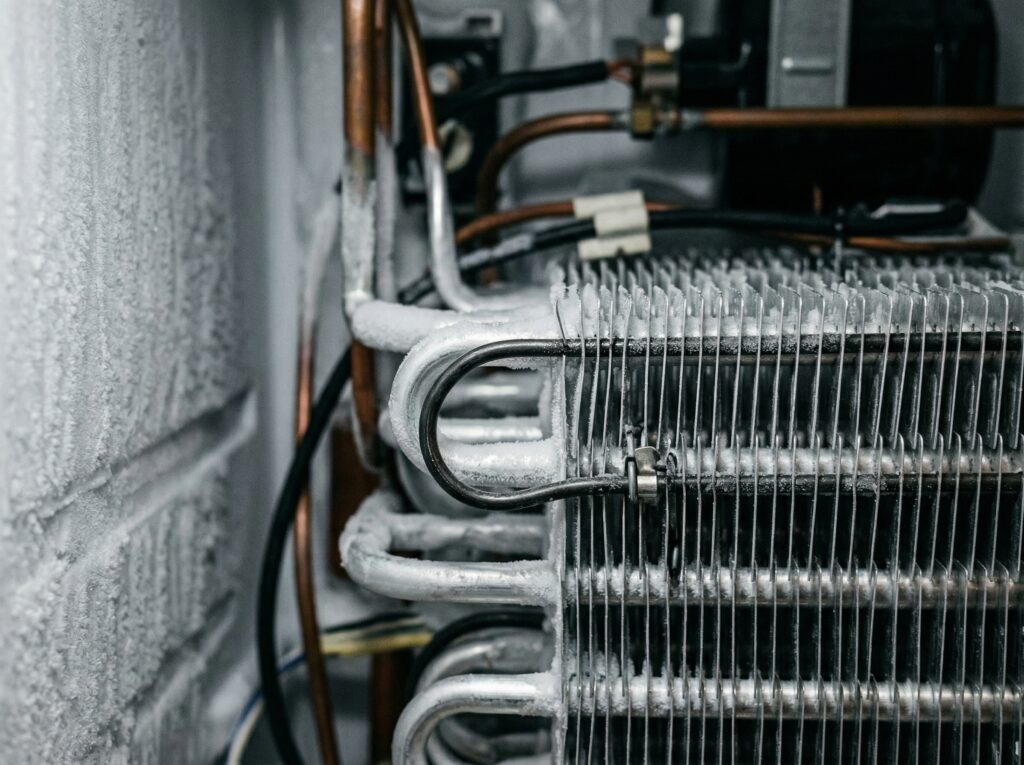
A modern frost-free refrigerator runs a defrost cycle every six to twelve hours. The evaporator coil behind the rear panel gets cold enough to pull moisture out of the air and form a thin layer of frost during normal operation. The defrost heater melts that frost off the coil three or four times a day, and the meltwater drains down a small tube into a pan above the compressor where it evaporates harmlessly. When any single part of that loop fails, the frost stops melting, builds up into a solid sheet of ice, and starts blocking airflow into the fresh food compartment. Your milk gets warm. Your lettuce freezes. Your hydro bill jumps because the compressor never stops running.
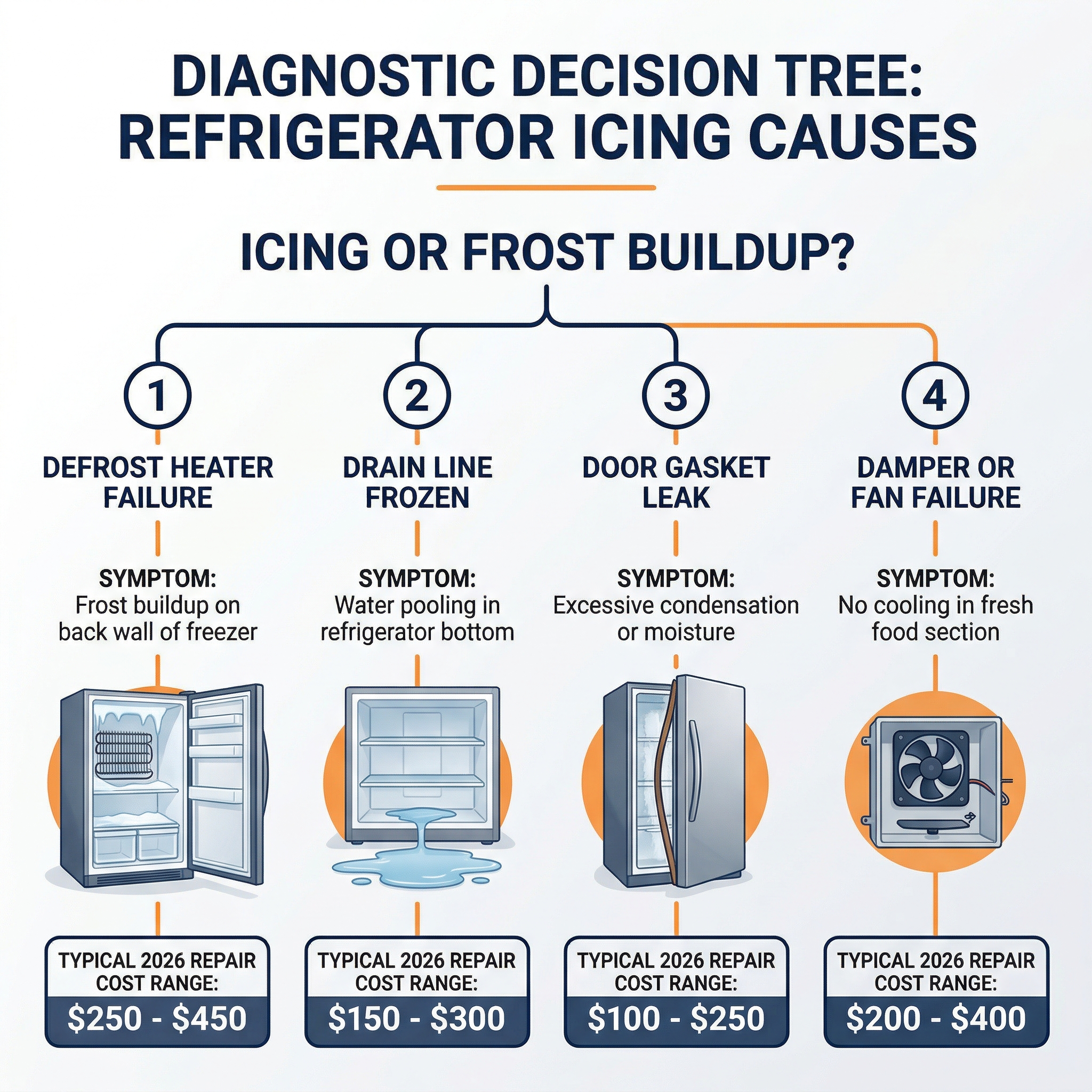
The four root causes of fridge icing in London ON homes
1. Defrost heater or defrost thermostat failure
This is the most common one we see in London. The defrost heater is a 200 to 400 watt element wrapped around the evaporator coil. When it burns out (or when the bimetal defrost thermostat that triggers it fails open), the defrost cycle stops happening. Frost on the coil grows into solid ice over a week or two. You will hear the fridge running constantly and notice the freezer is fine but the fresh food side is warm. Fix: replace the defrost heater or thermostat. Parts are $25 to $90 and the labour is one hour for most LG, Samsung, Whirlpool, and Frigidaire models. Total bill in London usually $220 to $340.
2. Defrost drain line frozen solid
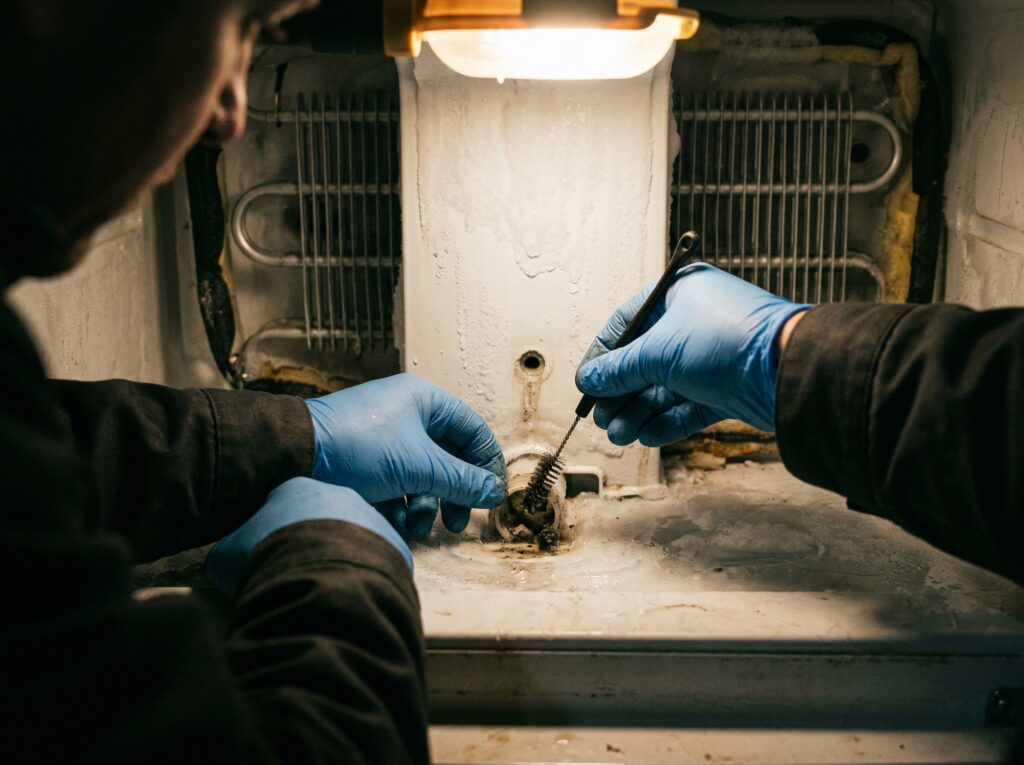
Once the defrost meltwater has nowhere to go because the drain tube has clogged with food residue and refrozen, water pools on the freezer floor or runs out the bottom of the fridge across your kitchen tile. Eventually the ice climbs back up the drain into the evaporator area. We see this constantly on five to ten year old French door units in London townhomes. Fix: thaw the drain with a turkey baster of warm water, clear the clog with a flexible brush, and install a small drain tube heater clip on chronic offenders. Total bill $180 to $260.
3. Door gasket leak letting humid London air in
London summers are humid. If your door gasket has compressed flat or torn at a corner, every time the door cycles, warm humid air sneaks in and dumps moisture onto the cold evaporator coil. The defrost cycle cannot keep up with the extra load and frost wins. You can test this with a dollar bill: close the door on the bill at four spots around the gasket and try to pull it out. If it slides out without resistance, that section is leaking. Fix: replace the gasket. Parts $90 to $220 depending on brand. Labour 30 to 45 minutes. Total bill $200 to $320.
4. Damper or evaporator fan failure
The damper is a small motorised flap that controls how much cold air flows from the freezer into the fresh food side. The evaporator fan blows air across the coil into both compartments. When either one fails, cold air either pours into the wrong compartment or stops circulating entirely. The coil overcools, frost cannot defrost properly, and ice builds. Fan failures usually announce themselves with a clicking or grinding sound from the back of the freezer. Fix: replace the fan motor or damper assembly. Total bill $260 to $420.
How a real diagnosis works in your kitchen
Before any London appliance technician quotes a part swap, the visit should include a temperature reading at three points in the fresh food and freezer compartments, a manual forced defrost via the diagnostic mode (every modern fridge has one), a visual inspection of the evaporator coil after pulling the rear panel, and a continuity test on the defrost heater and thermostat with a multimeter. If a tech walks in, looks at the ice, and orders a control board without doing any of that, get a second opinion. The Technical Standards and Safety Authority licensing on appliance repair in Ontario covers gas, but the diagnostic discipline applies to electrical work too. A real diagnosis takes 20 to 40 minutes.
What you can check yourself in five minutes
- Read the temperature. Fresh food should be 3 to 4 C. Freezer should be -18 C. If both are warm, suspect compressor or sealed system. If only fresh food is warm, suspect defrost or airflow.
- Check the door gasket. Run the dollar bill test at all four corners. Replace if it slides out anywhere.
- Look at the back of the fridge. The condenser coils on the lower back should be clean. Vacuum any dust and pet hair. Dirty coils make every other problem worse.
- Listen for the evaporator fan. Open the freezer and you should hear a soft fan inside. If it stops the moment you open the door, that is normal (door switch). If it never runs at all, fan motor is gone.
- Check the floor under the fridge. Water pooling means the drain line is blocked.
What the repair costs in London Ontario in 2026
Rough 2026 London ON pricing for the most common fridge icing repairs:
- Diagnostic fee (waived with repair): $89 to $110
- Defrost heater or thermostat replacement: $220 to $340
- Drain line clear and heater clip install: $180 to $260
- Door gasket replacement: $200 to $320
- Evaporator fan motor replacement: $260 to $420
- Damper assembly replacement: $240 to $380
- Control board diagnosis and replacement: $380 to $620
Your hydro savings after the repair often pay for the visit in three to six months. An iced-up fridge runs the compressor 30 to 50 percent more than a healthy one, which adds $8 to $15 a month to your London Hydro bill at 2026 time-of-use rates. EnerGuide data on refrigerator efficiency is clear that a malfunctioning defrost cycle is one of the top three energy waste sources in a Canadian kitchen.
When repair stops being worth it
A fridge under eight years old is almost always worth repairing. Between eight and twelve years old, repair if the bill is under 50 percent of replacement cost and the sealed system (compressor, condenser, evaporator) is healthy. Past twelve years old, replace if the sealed system needs work or if the unit is a builder-grade Frigidaire or Whirlpool. Premium brands like Sub Zero, Miele, and Bosch are worth repairing well past 15 years.
Frequently asked questions
Why is only the fresh food side warm but the freezer is fine?
Almost always a defrost or airflow problem. The freezer evaporator coil is icing over, blocking the air that should flow up into the fresh food compartment through the damper. The freezer stays cold because it sits right on the coil. The fresh food side starves for cold air. Ninety percent of the time this is a defrost heater, defrost thermostat, or damper failure.
How long does a defrost heater repair take in my London home?
About 60 to 90 minutes on most modern French door and side-by-side fridges. A technician pulls the rear freezer panel, manually defrosts the coil with a steamer or warm water, swaps the heater and thermostat, runs a forced defrost cycle, and verifies the temperature drops correctly across both compartments before leaving.
Can I just unplug the fridge for 24 hours and let it defrost itself?
That clears the ice for a few days, yes. It does not fix the underlying cause. Within one to three weeks the ice comes back because the broken defrost component is still broken. Use the trick to avoid food loss while you wait for a service appointment, not as a repair.
Is it safe to use a hair dryer to melt the ice?
Yes if you keep it moving and away from any plastic interior parts. A hair dryer on low heat is the standard technician trick for emergency defrost when a steamer is not available. Do not point it at the evaporator coil itself for more than a few seconds at a time and keep a towel under the unit to catch the meltwater.
How fast can Max Appliance Repair London come out?
Same week in most cases, often next day for fridge calls because we treat refrigeration as urgent. Spring and summer are our busy season. The diagnostic fee is waived if you book the repair on the same visit.
Get a real diagnosis before you replace a working fridge
Most fridge icing problems in London Ontario homes are a one-hour repair under $300. The expensive jobs come from misdiagnosis or from waiting until the compressor fails from running 24 hours a day. book a London service call and we will read the temperatures, check the defrost system, and tell you exactly which of the four root causes is icing up your fridge.

Written by
Rachel C.
Appliance repair writer and home maintenance researcher based in London Ontario
Rachel is a home maintenance writer based in London, Ontario, focusing on appliance repair and troubleshooting for southwestern Ontario homeowners.
