

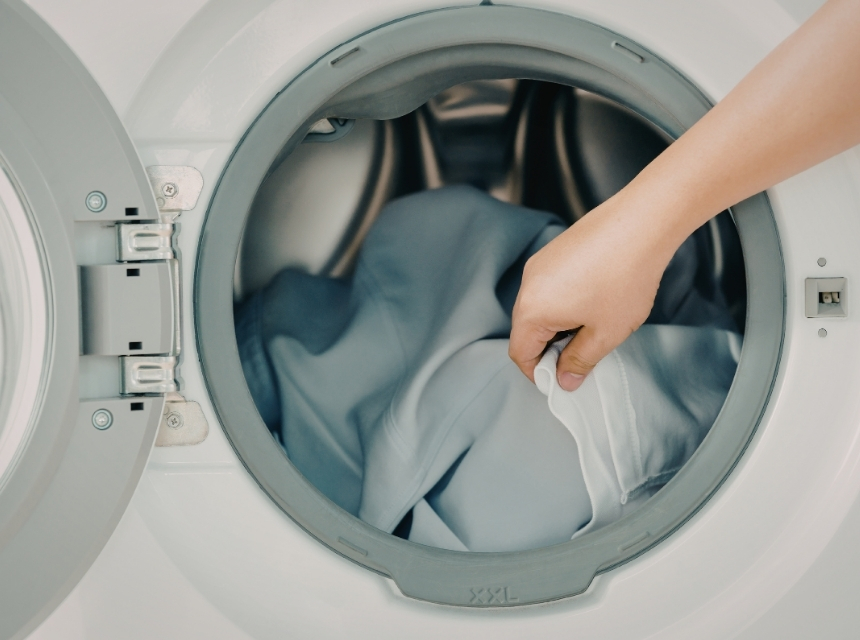
You run a load of laundry, open the washer, and something hits you. That damp, musty smell that gets into your towels and workout gear. London, Ontario homes deal with this more often than you might think, partly because of our humidity levels through spring and summer. Washing machine odour is almost always a maintenance issue, not a mechanical failure. Here is exactly what causes it and how to get rid of it for good.
Why front-loaders develop mildew smell
Front-load washers are highly efficient but they have one design quirk that creates problems: the rubber door gasket. That thick rubber seal sits in a fold around the door opening and traps water after every cycle. In a closed machine, that water sits in a warm environment with zero airflow. Mildew grows within 24 to 48 hours. Repeat that cycle daily for a few months and you have a machine that smells regardless of how much detergent you use.
Top-loaders get this problem less often because the drum opening faces up and water drains naturally. Front-loaders require active maintenance to avoid it. The good news is that it is entirely preventable with the right habits.
Why detergent makes it worse
High-efficiency (HE) detergents are designed for front-loaders, but many people use too much of them. Excess detergent does not rinse out completely and leaves a film on the drum interior. That film catches moisture and becomes a breeding ground for the bacteria and mildew responsible for the smell. Front-loaders need roughly a third of the detergent a top-loader uses.
Did you know?
Most mildew smell in front-loaders is caused by three things acting together: excess detergent residue, a closed door after washing, and an irregular cleaning schedule. Fixing all three eliminates the smell in most cases without any parts or repairs.
The four sources of washing machine odour in London homes
There is more than one place the smell can come from. Running a clean cycle helps with the drum, but if the actual source is the gasket fold or the drain filter, the problem comes back within a week.
1. The rubber door gasket fold
This is the most common source. Pull back the rubber fold on the door seal and look inside. You will often find standing water, black mildew spots, and sometimes forgotten socks or small items. This fold needs to be wiped weekly with a cloth dampened in white vinegar. If you see black mildew that does not wipe away easily, spray diluted bleach solution and let it sit for 10 minutes before wiping.
2. The drum interior
Detergent buildup on the drum itself contributes to both the smell and the mildew growth. Run an empty hot cycle with two cups of white vinegar once a month. While the drum is still warm, wipe it down with a cloth. The hot vinegar cycle loosens and removes the biofilm that traps odours.
3. The drain pump filter
Most front-loaders have a small filter at the bottom front of the machine, usually behind a small access panel. This filter catches lint, coins, and other debris from draining. A clogged filter holds standing water and bacteria. Pull it out, rinse it under hot water, and replace it every month or two.
4. The detergent drawer
The detergent tray sits in a warm, damp spot with detergent residue after every cycle. Pull it out completely, rinse it under hot water, and scrub the black mildew deposits from the slot it sits in. A small brush works well for this. Many people clean the drum and gasket and forget this part entirely.
How to clean a smelly washing machine step by step
This process handles all four sources in one session. It takes about 30 minutes of active work plus two machine cycles.
- Pull out and clean the detergent drawer. Rinse it under hot water, scrub mildew deposits, and let it dry. Clean the slot it sits in with a damp cloth or small brush.
- Clean the gasket fold. Wipe every part of the rubber fold with white vinegar. If you see black mildew spots, spray with a 1:10 bleach-to-water solution, wait 10 minutes, and wipe. Use a dry cloth to remove all moisture.
- Check and clean the drain filter. Open the access panel at the bottom front, place a towel down, unscrew the filter, and rinse it under hot water. Replace it once dry.
- Run a hot clean cycle with vinegar. Add 2 cups of white vinegar directly to the drum and run the hottest, longest cycle available with no laundry inside.
- Run a second cycle with baking soda. Add half a cup of baking soda to the drum and run another hot cycle. This neutralizes vinegar residue and odours.
- Wipe down and leave the door open. While the drum is still warm, wipe the interior and gasket fold one more time. Leave the door open to air-dry completely.
People often ask: How long does it take to get rid of washing machine smell?
One thorough clean session as described above usually eliminates 80%% to 90%% of the smell. Run one more clean cycle after three days if you can still detect odour. Maintaining the habit of leaving the door open and cleaning the gasket weekly prevents it from returning.
How to prevent washing machine smell from coming back
Three habits prevent virtually all mildew growth in front-loaders. They take less than two minutes per laundry day.
- Leave the door open after every load until the drum is dry. Even 30 minutes of airflow makes a significant difference.
- Use the right amount of HE detergent. The cap marking on most bottles is for top-loaders. Front-loaders need about one third of that amount.
- Clean the gasket fold and run a clean cycle once a month. Fifteen minutes of maintenance once a month prevents hours of troubleshooting later.
When to call a repair technician in London Ontario
If you have done a thorough clean and the smell returns within a week, the problem is mechanical rather than maintenance. A technician should check the drain pump for wear, inspect the drum seal for cracks that trap water deeper than surface cleaning reaches, and verify the hot water supply is actually reaching temperature. Max Appliance Repair London offers same-day washer repair service across London, ON, St. Thomas, Strathroy, Woodstock, and surrounding areas with free service calls on all completed repairs.
Frequently asked questions
Why does my front-load washing machine smell like mildew?
Front-loaders trap moisture between the rubber door gasket and the drum after each cycle. If the door stays closed, that moisture grows mildew within 24 to 48 hours. The fix is to leave the door open after each wash to allow the drum to dry, and to clean the gasket fold weekly.
How do I get the mildew smell out of my washing machine?
Run an empty hot water cycle with two cups of white vinegar, then run a second empty cycle with half a cup of baking soda. While the drum is still warm, wipe the gasket folds and door glass with a cloth dampened in white vinegar. Leave the door open to dry completely before the next use.
Does the mildew smell mean my washing machine needs to be repaired?
In most cases, no. Mildew smell is a maintenance issue, not a mechanical one. If the smell persists after thorough cleaning and consistent door-open habits, the drain pump filter may be clogged or the drum itself may need a professional clean. Call Max Appliance Repair London if basic cleaning does not resolve it.
How often should I clean my washing machine?
Run a hot clean cycle once a month. Wipe the gasket folds and door seal after every wash. Leave the door open between uses. These three habits prevent virtually all mildew buildup in front-loaders.
Can a smelly washing machine damage my clothes?
Yes. A washing machine with significant mildew or bacterial buildup can transfer odours to your laundry, particularly towels and gym clothes. If your clean laundry smells musty immediately after washing, the machine itself is the source and needs cleaning before your next load.
Most washing machine mildew problems are entirely fixable with the right cleaning routine. If the smell persists after a thorough clean, Max Appliance Repair London serves London, Strathroy, Woodstock, and St. Thomas with same-day service and free service calls on completed repairs.
