

An ice storm rolls through southwestern Ontario, a line comes down, and suddenly your kitchen is dark and your freezer is on a clock. Proper appliances power outage preparation is what stands between a minor inconvenience and a fridge full of spoiled groceries plus a control board fried by an electrical surge when power snaps back. The two biggest risks in a winter outage are food spoilage and electrical spikes, both of which are easy to prevent. If a surge takes out your fridge, our refrigerator repair team in London can diagnose it, but taking proactive steps keeps your home safe and protected.
Here is how long your food stays safe, how to shield your kitchen units from power spikes, and a simple checklist for practical appliances power outage preparation before a winter storm lands.
What an outage does to your appliances
The blackout itself is rarely what damages equipment. Rather, it is the two distinct phases around an outage that cause issues. First, while the power is off, your fridge and freezer slowly warm toward temperatures where food spoils. Second, when the grid restores electricity, it often returns with a severe voltage spike that can burn out sensitive electronic control boards in modern fridges, ranges, washers, and dishwashers.
Older units with mechanical controls easily handle a surge. However, modern models with digital displays and circuit boards are far more vulnerable, and those boards are costly to replace. Effective appliances power outage preparation focuses on two critical goals: keeping cold air inside cooling units and keeping harmful spikes away from digital electronics.
Quick take
Two essential rules cover winter outages: Keep fridge and freezer doors shut to preserve internal cooling, and unplug major appliances so the initial restoration surge cannot damage them.
How long your fridge and freezer stay safe
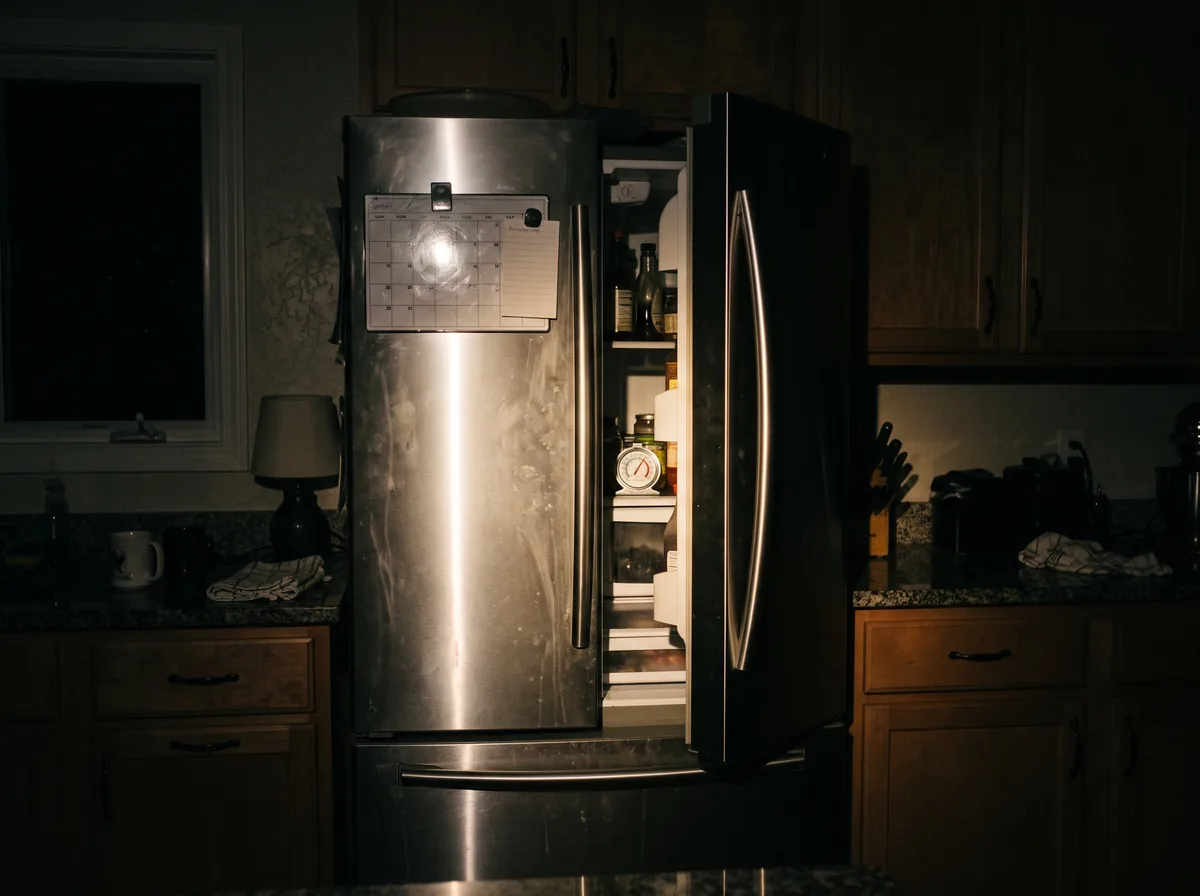
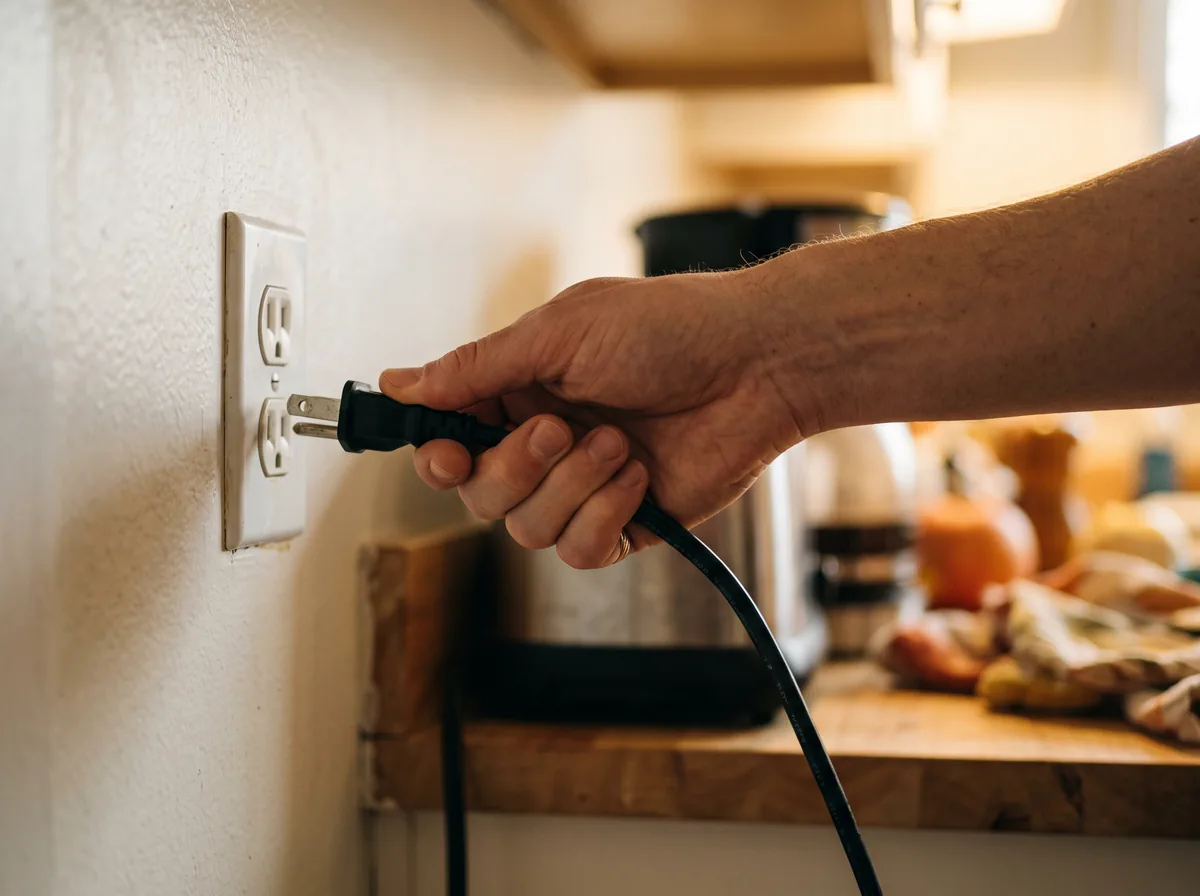
Knowing the food safety timeline helps prevent unnecessary food waste during a winter blackout. As long as doors remain completely closed, refrigeration units hold cold temperatures effectively:
| Situation | Stays safe for | Then what |
|---|---|---|
| Fridge, doors kept closed | About 4 hours | Discard perishables held above 4°C for over 2 hours |
| Full freezer, doors kept closed | About 48 hours | Refreeze only if still 4°C or has ice crystals |
| Half-full freezer, doors closed | About 24 hours | Check temperature before refreezing |
| Every door opening | Cuts the window | Cold air escapes rapidly; keep doors sealed |
For additional details on safe food holding times, consult the official Canadian Food Inspection Agency food safety pages.
Did you know
A completely full freezer holds cold temperatures significantly longer than a half-empty one because frozen items insulate each other. Filling extra space with water containers prior to a storm adds thermal mass and extends cooling safety by hours.
Protecting appliances from the power surge
Voltage surges during power restoration can ruin major household equipment instantly. Modern fridges, ranges, and laundry units contain delicate microprocessors that are susceptible to damage. Following official Canada.ca power outage guidelines, key appliances power outage preparation steps protect these units:
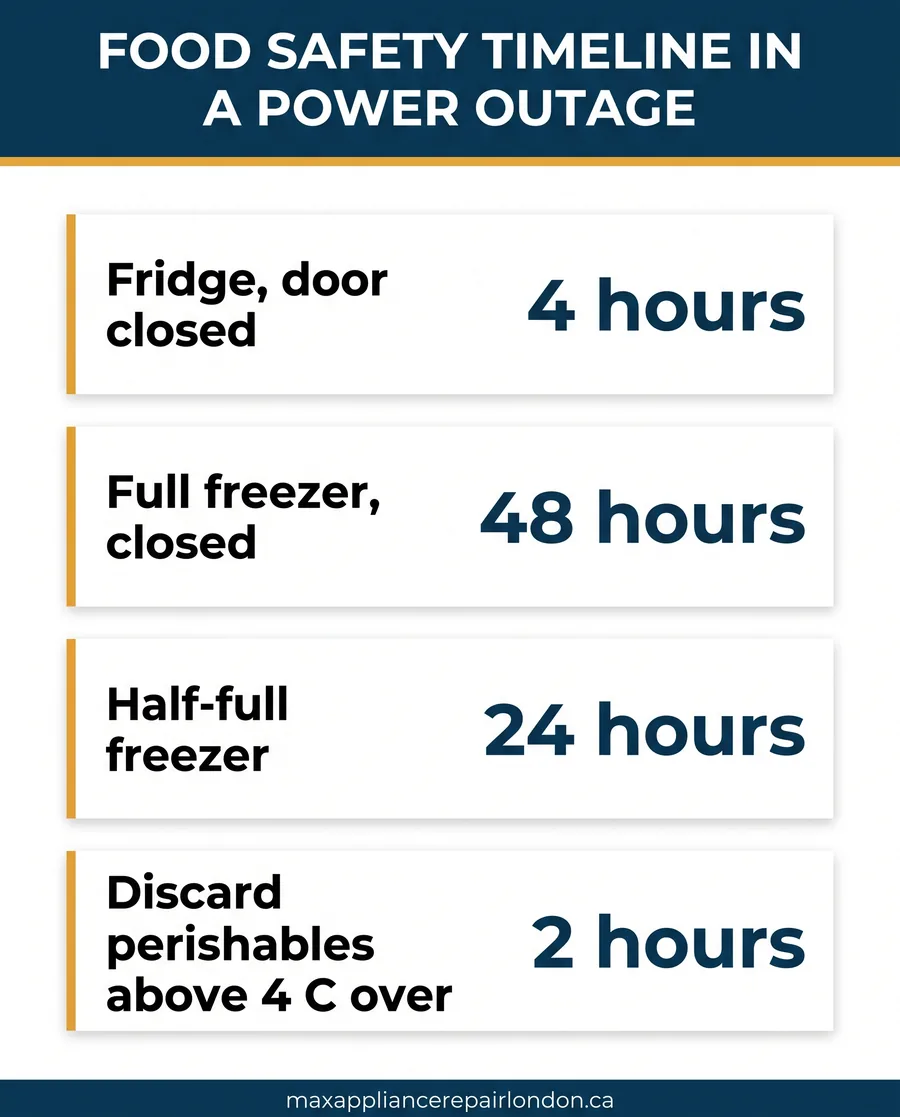
- Unplug major appliances: Turn off and disconnect appliances, including your refrigerator, freezer, stoves, dishwashers, microwaves, and laundry units, to avoid damage from power surges when electricity returns. Leave a single lamp or light switch on so you know when power is restored.
- Wait before reconnecting: Once power returns, wait a few minutes for the electrical system to stabilize before plugging equipment back in.
- Reconnect cold storage first: Plug in your refrigerator and freezer first to resume cooling, then gradually reconnect remaining major appliances.
- Install proper surge protection: Do not rely on generic plug-in surge protectors or power strips for high-draw appliances like refrigerators, ranges, or laundry units. Instead, use an appliance/load-rated surge protector designed for heavy-duty appliances, or have a Licensed Electrical Contractor install a whole-home surge protection device at your panel.
Watch for this after power returns
If an appliance turns on with a blank display, unusual odor, or trips the circuit breaker immediately, unplug it right away. These indicate surge-damaged electronics that require professional service before safe operation can resume.
Your before-the-storm appliances power outage preparation checklist
When severe winter weather threatens southwestern Ontario, execute this step-by-step appliances power outage preparation routine while grid power remains active:
- Lower temperature settings on your fridge and freezer a few hours ahead to store extra cold.
- Fill freezer gaps with containers of water to freeze into solid thermal mass.
- Group perishable items together for efficient access if you must transfer them to coolers later.
- Ensure essential electronic devices and backup power packs are fully charged.
- Locate flashlights and disconnect non-essential digital appliances if power drops.
- Keep internal appliance thermometers in place to monitor real internal temperatures accurately.
Save your money
Inexpensive appliance thermometers and proper surge protection cost significantly less than replacing fried circuit boards or replacing entire loads of spoiled food.
Generators and backup power, done safely
A portable generator can keep essential cooling appliances running during extended outages, but safety rules are vital. Never operate a generator indoors or near open windows due to deadly carbon monoxide risks. Additionally, do not plug a generator directly into household wall outlets (backfeeding), as this risks electrocuting utility workers line-side. Always run heavy-duty, outdoor-rated extension cords directly to individual appliances.
For whole-home backup integration, have a licensed electrician install a proper transfer switch. Check Hydro One safety guidelines for official recommendations on generator operation and grid safety.
Will appliances function normally after a brief power interruption?
Usually, yes. Short outages rarely spoil food if unit doors stay closed. However, electronic equipment can still experience subtle electrical damage from rapid power cycling or minor line spikes. If an appliance exhibits strange errors, display glitches, or unusual motor sounds following an outage, have it inspected promptly.
Download the free quick guide
A one-page checklist to protect your food and appliances before and during a winter outage.
Frequently Asked Questions
If a winter outage leaves your fridge, freezer, or range acting up once power returns, do not wait for a small fault to worsen. Max Appliance Repair London services homes across London, Ingersoll, and Woodstock. Book a repair today to get your appliances back to proper working order.
