
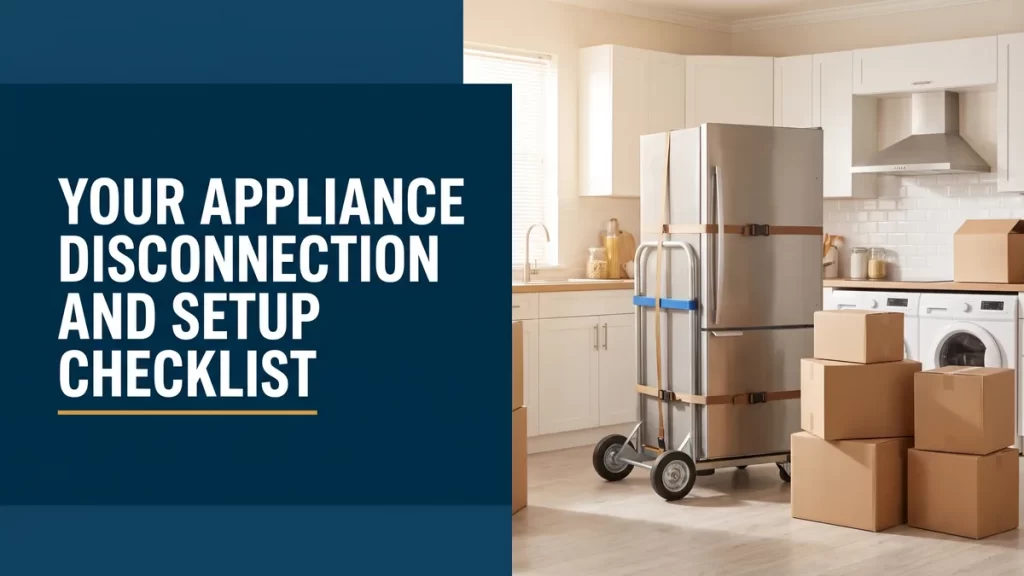
Moving to a new home is exciting until you face a fridge full of food, a plumbed washing machine, and a gas dryer. Following a comprehensive moving appliance checklist turns that stress into a straightforward process, protecting your equipment from transit damage and keeping your new home safe from water leaks or gas hazards. If you would rather have it handled end to end, our appliance delivery, installation, and pickup service in London does exactly that, but this guide walks you through doing it yourself the right way.
Work through these steps in order. Preparing your machines a few days in advance prevents defrost puddles in the moving truck, damaged water lines, and cooling issues when you plug your refrigerator in at your new home.
Why an appliance disconnection checklist matters
Major household appliances are heavy, plumbed, wired, and sometimes powered by gas. Disconnecting them incorrectly can result in severe issues, such as water damage from an unsealed line, a ruined compressor from transporting a refrigerator on its side, or dangerous gas leaks. Using an organized moving appliance checklist ensures no critical safety steps are overlooked.
Taking a systematic approach also protects your home and property. Spending a few minutes properly disconnecting each unit prevents costly emergency repairs and property damage during relocation.
Quick take
Three core rules prevent most moving-day appliance issues: shut off all utilities (power, water, and gas) before touching connections, keep refrigeration units upright, and always hire a TSSA-registered fuels contractor employing an appropriately certified gas technician to disconnect gas lines.
The week before: prep that saves you grief
Preparing appliances the morning of the move leads to unnecessary delays. Complete these essential tasks during the week leading up to moving day:
- Measure entryways: Check all machine dimensions against doorways, stairwells, and hallways at both locations.
- Empty contents: Use up perishable food items early to minimize waste and transport weight.
- Schedule licensed professionals: Book a TSSA-registered fuels contractor employing an appropriately certified gas technician well in advance for any gas appliance disconnections.
- Locate manuals and transit hardware: Ensure you have the original shipping bolts for front-load washing machines.
- Gather moving supplies: Secure buckets, towels, heavy-duty tape, moving blankets, and an appliance dolly.
Your moving appliance checklist, machine by machine
Refrigerator and freezer:
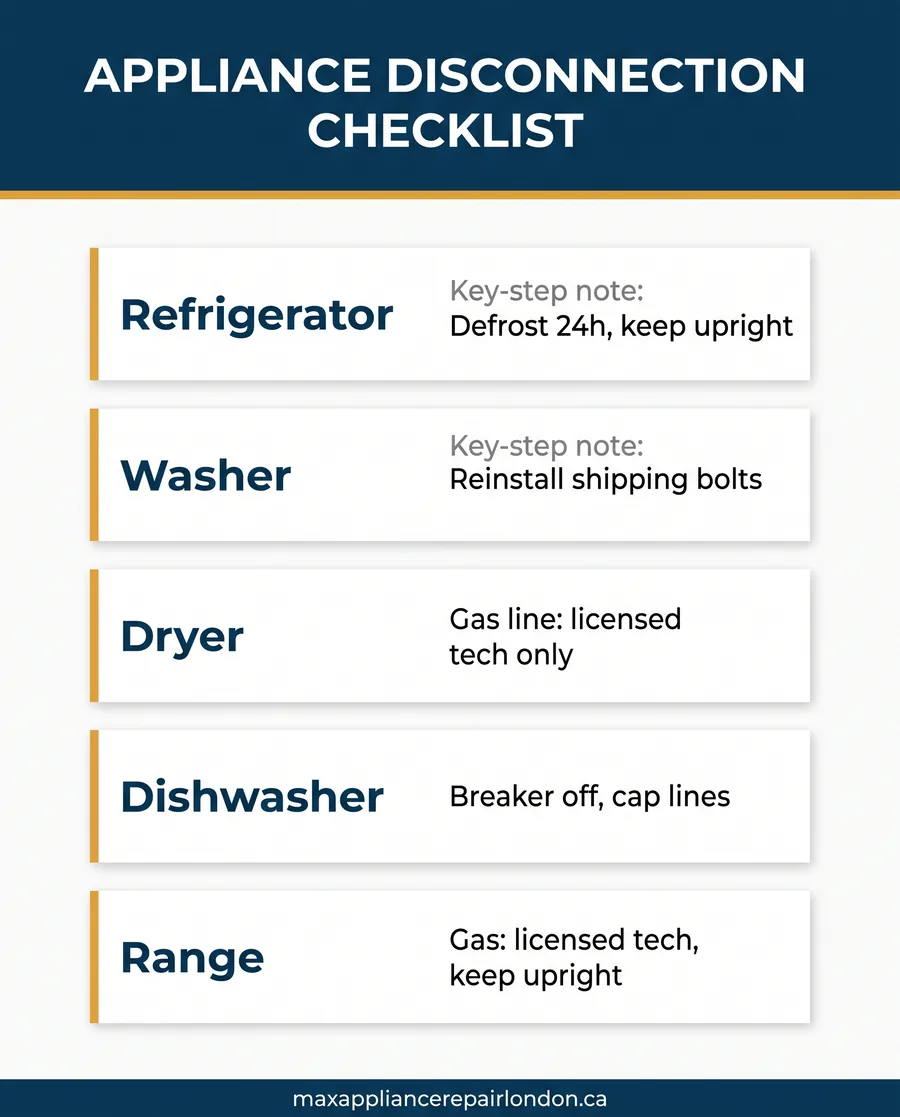
- Empty all food items, unplug the unit, shut off the water valve for the ice maker, and drain the line into a towel.
- Defrost the freezer completely at least 24 hours prior to moving, and wipe all internal surfaces dry.
- Secure the doors with tape, coil the power cord, and keep the unit upright unless the manufacturer permits otherwise.
Washing machine:
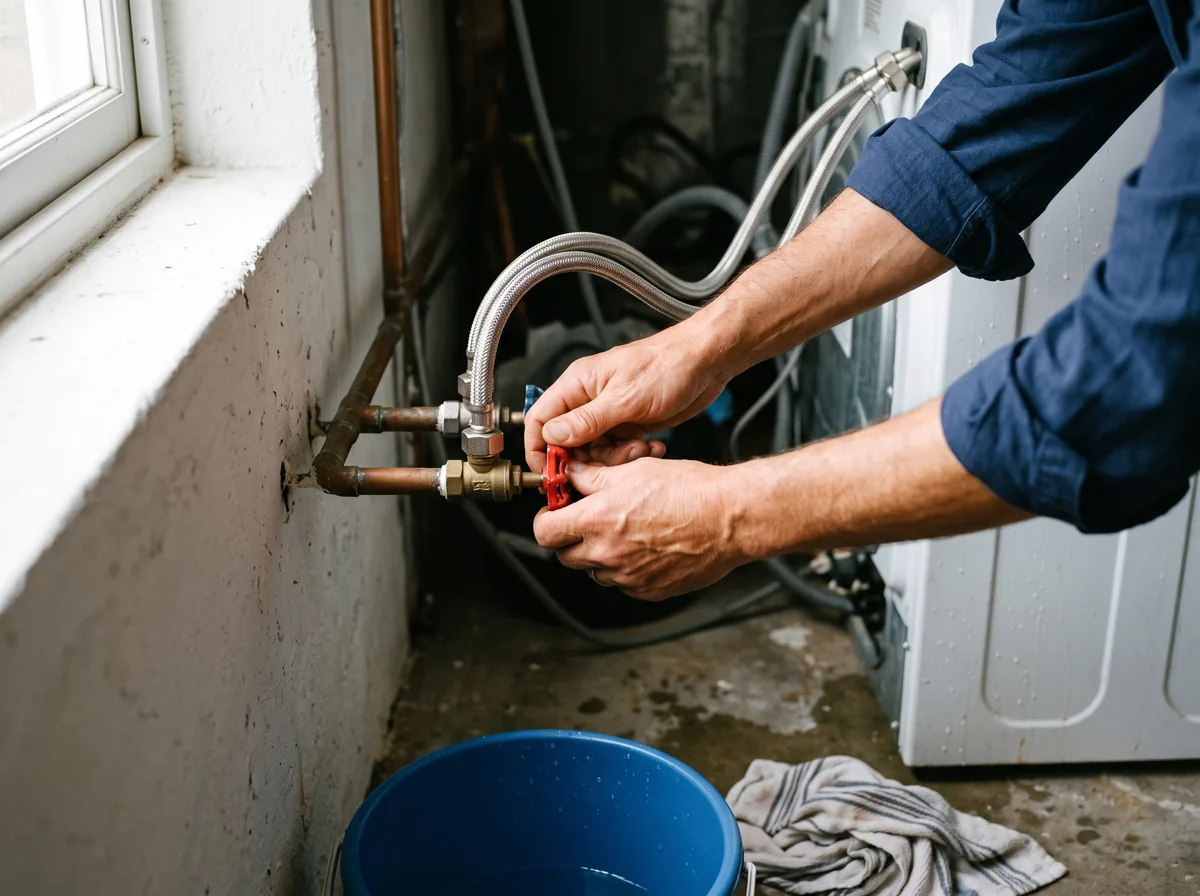
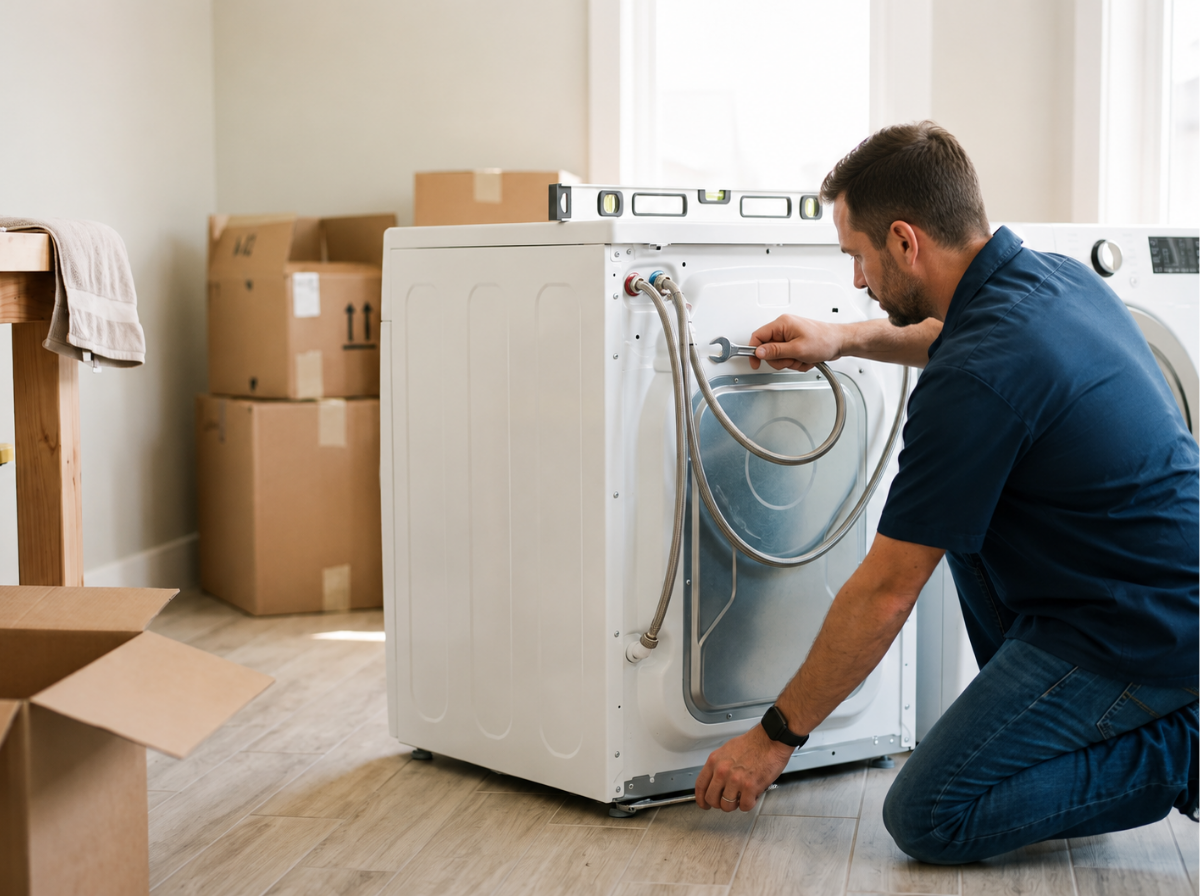
- Shut off the hot and cold water supply valves, then disconnect the inlet hoses into a bucket.
- Unhook the drain hose, allow residual water to empty, and run a short spin cycle to drain the internal pump.
- Install transit shipping bolts to lock the drum, unplug the power cord, and secure hoses to the back of the machine.
Dryer (electric or gas):
- For electric dryers, unplug the power cable, then disconnect and clean the exhaust vent duct.
- For gas dryers, hire a TSSA-registered fuels contractor employing an appropriately certified gas technician to shut off, disconnect, and cap the gas line safely.
- Secure the power cord or capped connection, and tape the dryer door shut for transit.
Dishwasher, stove, and range:
- Dishwasher: Turn off power at the circuit breaker, close the water supply valve, disconnect supply and drain lines, and dry the base.
- Electric range: Turn off the breaker and unplug the cord (hardwired units require a qualified electrician).
- Gas range: Have a TSSA-registered fuels contractor employing an appropriately certified gas technician disconnect and cap the gas supply line before moving the range upright.
Reconnecting and setting up in your new home
Reinstalling appliances requires carefully reversing the disconnection steps. Following an accurate moving appliance checklist during setup ensures proper operation:
- Inspect hardware: Check hoses, cords, and fittings for any stress or damage incurred during transport.
- Upgrade water lines: Replace old rubber washer hoses with new braided stainless steel lines to prevent future leaks.
- Professional gas connection: Ensure a TSSA-registered fuels contractor employing an appropriately certified gas technician handles all gas reconnections and performs mandatory pressure leak tests.
- Level each unit: Adjust the feet on washers and refrigeration units to prevent vibration, excessive noise, or improper door seals.
- Test for leaks: Run test cycles on washing machines and dishwashers while checking all connections closely.
In Ontario, gas work is strictly regulated by the Technical Standards and Safety Authority (TSSA). You can search the TSSA contractor registry to find or verify a registered contractor so your gas appliances are connected legally and safely.
How long to wait before using each appliance
Certain appliances require resting time after transport to allow internal fluids and compressors to settle. Refer to the table below and your manufacturer’s manual before applying power.
| Appliance | Wait before use | Why |
|---|---|---|
| Refrigerator or freezer | Follow manufacturer specifications | Follow the model’s moving instructions. Keep the refrigerator upright unless the manufacturer permits otherwise; after transport, wait the manufacturer-specified time before connecting power (see guidance from GE and Whirlpool). |
| Washing machine | Immediately after setup | Ensure transit bolts are removed, unit is level, and connections are leak-tested |
| Gas dryer or range | After licensed hookup | Requires professional connection by a TSSA-registered fuels contractor and certified gas leak testing |
| Dishwasher | Immediately after setup | Verify correct leveling, secure water lines, and run a test cycle |
Download the free quick guide
A printable, single-page guide covering your essential appliance disconnection, transport, and setup steps.
Frequently Asked Questions
Relocating locally or moving to a new area? Max Appliance Repair London disconnects, transports, reconnects, and services major home appliances across London, Woodstock, St. Thomas, and Ingersoll. Contact our team today to schedule professional support for your upcoming move.
