


It usually starts late at night, when the house is quiet. A low grind, a rattle, then silence, then the grind again. If your fridge is making a grinding noise, your first question is the right one: is this normal, or is something about to fail? The honest answer is that a fridge is full of moving parts, and most of them announce trouble through sound long before the food spoils. Knowing which sound means “ignore me” and which means “call someone today” can save you a ruined grocery haul. If a noise has you worried right now, our refrigerator repair team in London diagnoses these every week.
This guide walks through the everyday fridge sounds, what each one usually points to, and the safe checks you can run yourself before you decide whether it is a quick fix or a service call.
In this article
- Sounds that are completely normal
- Why your fridge is making a grinding noise
- The evaporator fan: the usual suspect
- The condenser fan and compressor
- Ice maker and water line sounds
- Safe checks you can do yourself
- When to stop and call a technician
- What fridge noise repairs cost in London
- Frequently asked questions
Sounds that are completely normal
Modern refrigerators are not silent, and they were never meant to be. Before you assume the worst, it helps to know the soundtrack of a healthy fridge. Many of the noises that send people searching online are simply the appliance doing its job.
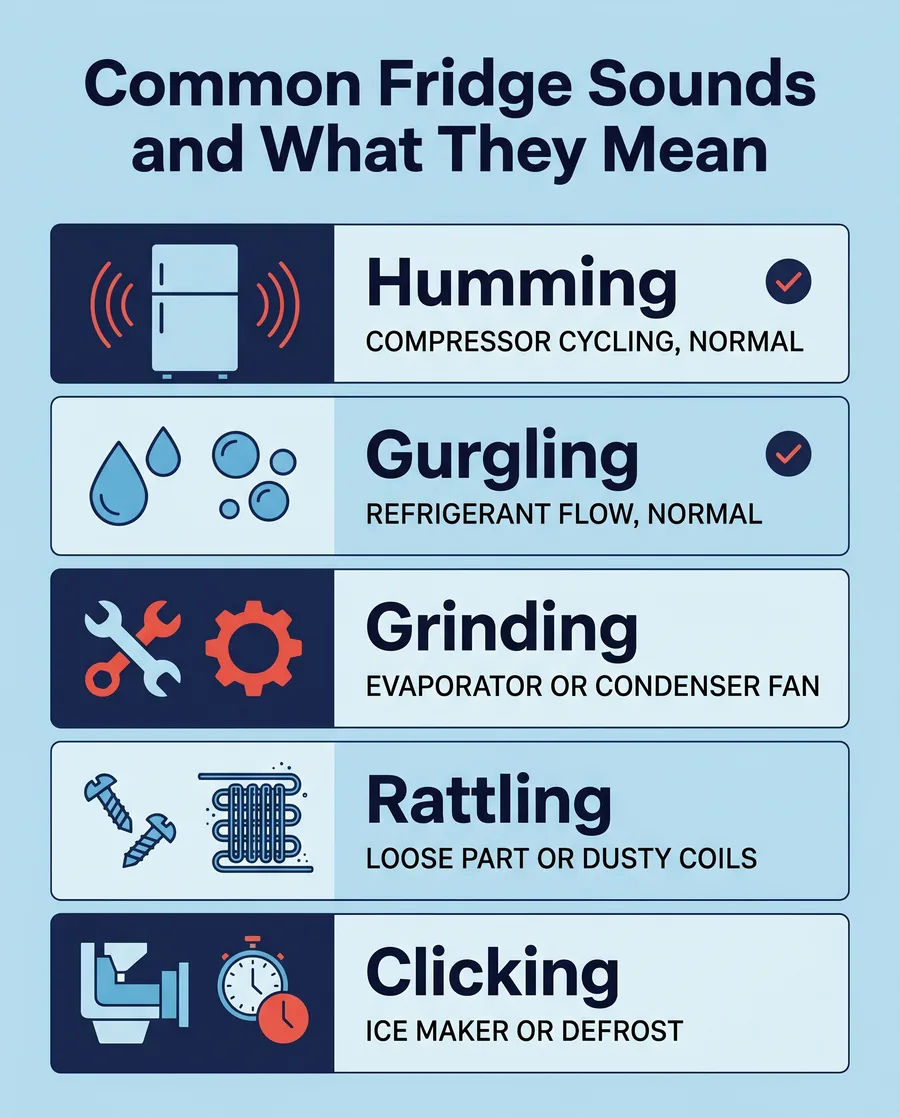
- Humming or low buzzing. That is the compressor cycling on. It runs in spells, then rests. A steady, even hum is a good sign.
- Gurgling or trickling. Refrigerant and water moving through the lines. Perfectly normal, especially right after the cooling cycle.
- Popping or crackling. Plastic parts expanding and contracting as the interior changes temperature. Annoying, harmless.
- A short hiss or sizzle. On frost-free models, water dripping onto the warm defrost heater during the defrost cycle. Expected.

Why your fridge is making a grinding noise
Safety first: The tips here are for general guidance only. Max Appliance Repair London is not responsible for any damage, injury, or cost resulting from action taken based on this content. Always unplug an appliance at the wall before you inspect it. Do not attempt electrical repairs unless you are qualified, and never work on a gas appliance yourself. In Ontario, gas work must be carried out by a TSSA-licensed technician. When in doubt, stop and call a professional.
A grinding noise is different from a hum or a gurgle. It is rough, mechanical, and it usually means a moving part is straining against something it should not touch. In a fridge, almost everything that grinds comes down to one of three motors: the evaporator fan, the condenser fan, or the compressor. The trick is figuring out which one, because the fix and the cost vary wildly from one to the next.
Start by locating the sound. Open the freezer and listen. If the grinding gets louder with the door open, the source is likely inside the freezer compartment. If it is louder from behind or underneath the fridge, the culprit is probably at the back. That single observation narrows the field fast.
Pro tip: open the door and listen for a change
Here is a thirty-second test a technician runs first. Open the freezer door and press the light switch in with your finger to keep the fridge thinking the door is closed. If the grinding suddenly gets louder or changes pitch, the evaporator fan inside the freezer is almost certainly involved. If nothing changes, the noise is coming from the back or bottom of the unit.
The evaporator fan: the usual suspect
The evaporator fan sits behind a panel inside the freezer and pushes cold air through the fridge. It is the most common source of a grinding or buzzing noise, and the reason is almost always ice. When frost builds up where it should not, the fan blade clips it on every rotation, which produces that rhythmic grind. A worn fan motor bearing makes a similar sound, but drier and more constant.
If the grinding comes with poor cooling, ice is the likely cause, and that often points to a defrost system problem rather than the fan itself. We cover that pattern in our guide to a refrigerator that keeps icing up. If the fridge still cools well but grinds, the fan motor or blade is the more likely issue.
Red flag: grinding plus a warming fridge
If the grinding is paired with food in the fresh-food section going warm, do not wait. A blocked or failing evaporator fan means cold air is not circulating, and the freezer can stay cold while the fridge climbs into the unsafe zone. Move perishables to a cooler and book a repair. Our guide on a refrigerator that is not cooling explains why this combination matters.
People often ask: can I just spray the noisy fan with oil?
No, and it can make things worse. Most fridge fan motors are sealed and are not designed to be oiled, and lubricant can attract dust or drip onto electrical parts. If a fan is grinding because of a worn bearing, the motor needs replacing, not lubricating. If it is grinding because of ice, the real fix is solving the frost buildup. A quick spray treats the symptom for a day and hides the actual problem.
The condenser fan and compressor
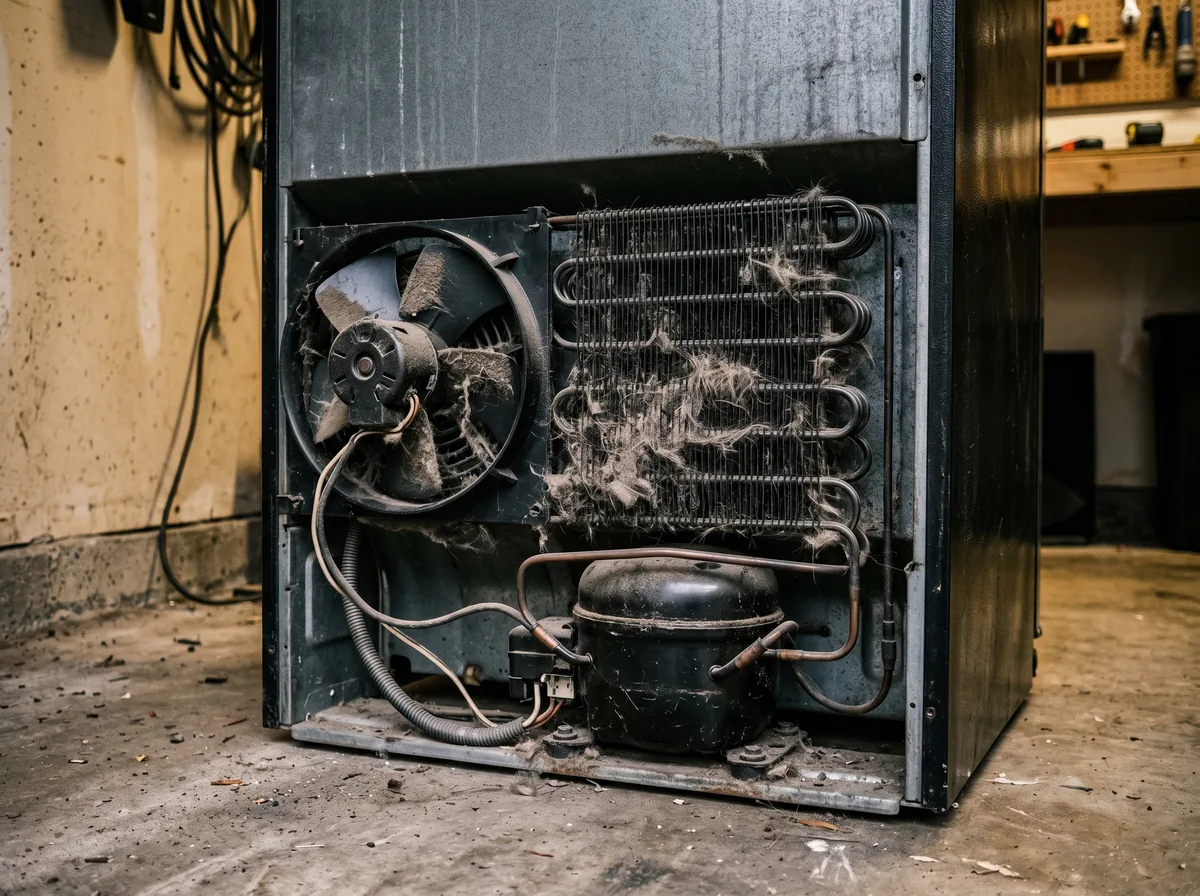
Move to the back of the fridge and the next two suspects appear. The condenser fan lives near the compressor, usually behind a lower rear panel, and it cools the coils. Because it sits low, it pulls in dust, pet hair, and kitchen grime, and a clogged blade grinds or rattles as it spins. This is one of the few fridge noises with a genuine do-it-yourself fix: cleaning.
The compressor itself is the sealed motor that pumps refrigerant. A healthy compressor hums. A compressor that grinds, knocks, or rattles loudly can signal worn internal parts or failing mounts. Compressor work is a sealed-system repair that needs a qualified technician and, in many cases, makes you weigh repair against replacement. Our piece on whether to repair or replace an appliance can help you make that call.
Ice maker and water line sounds
Not every grind comes from a motor. Fridges with an automatic ice maker produce a whole vocabulary of clicks, whirs, and grinding noises on a schedule. The harvest cycle, when the ice maker twists and drops cubes, can sound alarming the first time you hear it. A grinding or buzzing tied to the ice maker often means the unit is trying to make ice without water, usually because the water line is kinked or the inlet valve is failing.
If the noise repeats every couple of hours and stops when you switch the ice maker off, you have found your answer. A persistent grind from a dry ice maker should be addressed, since running it without water can wear the motor.
Safe checks you can do yourself
Before you call anyone, there are a handful of safe, no-tools checks that solve a surprising number of noisy fridges. Always unplug the fridge at the wall before you reach behind or underneath it.
- Level the fridge. A unit that rocks slightly can buzz and rattle. Adjust the front feet so it sits firm and tilts back a hair.
- Clean the condenser coils. Unplug the fridge, pull off the lower rear or front grille, and vacuum the dust from the coils and fan. Do this twice a year.
- Check for contact. Make sure the fridge is not touching the wall, a cabinet, or a water line, which can amplify a small vibration into a loud rattle.
- Inspect the drip pan. A loose drip pan underneath can rattle. Reseat it if it has shifted.
- Listen after a defrost. If the grind only appears for a while after the freezer self-defrosts, note that timing for the technician. It points toward the defrost system.
When to stop and call a technician
Some fridge noises are a job for a professional, full stop. Anything involving the sealed refrigerant system, the compressor, or electrical components is not a do-it-yourself project. In Ontario, you should never attempt sealed-system or electrical repairs unless you are qualified.
- A loud knocking or grinding from the compressor that does not stop.
- Grinding paired with the fridge no longer cooling properly.
- A burning smell, scorched wiring, or any sign of an electrical fault.
- A fan you can see is jammed or broken, where ice removal has not helped.
- Repeated icing that keeps coming back after you defrost it.
What fridge noise repairs cost in London
Pricing note: The figures on this page reflect typical market rates in London, Ontario and the surrounding area as of 2026. What you actually pay depends on the make and age of your appliance, the parts involved, and how easy the unit is to access. Always get a written quote before approving a repair.
Cost depends entirely on which part is making the noise. The ranges below are typical starting points for London, Ontario in 2026 to help you set expectations. For a fuller breakdown, see our guide to appliance repair costs in London.
| Likely cause of the noise | Typical repair range (2026) | Difficulty |
|---|---|---|
| Dusty condenser coils or fan | Often a free DIY clean | Easy |
| Evaporator fan motor replacement | $200 to $400 | Technician |
| Condenser fan motor replacement | $200 to $400 | Technician |
| Defrost system repair (causing ice) | $250 to $500 | Technician |
| Ice maker or inlet valve | $180 to $400 | Technician |
| Compressor repair or replacement | $500 to $1,200+ | Specialist |
When a compressor repair approaches the price of a new fridge, replacement is usually the wiser choice on an older unit. Our repair-or-replace guide walks through the math.
Sources and further reading
- Max Appliance Repair London, in-house diagnostic experience and 2026 London, Ontario service pricing.
- AppliancePartsPros, “Refrigerator Making Noise: common causes and fixes” (video, embedded above).
- General refrigeration service guidance on evaporator fans, condenser fans, and defrost systems.
Frequently asked questions
Is it safe to keep using a fridge that is making a grinding noise?
It depends on whether the fridge is still keeping food cold. If it cools normally and the grind is mild, it is usually safe to keep using it while you book a repair, though the noise often gets worse over time. If the grinding comes with food going warm, a burning smell, or a fan you can see is jammed, stop using it and unplug it. A grinding noise is the appliance telling you a part is straining, so even when it is safe for now, it is best not to ignore it for long.
Why does my fridge grind only at certain times of day?
Refrigerators run on cycles, so a noise that comes and goes is often tied to one of those cycles. A grind that appears for twenty minutes or so on a schedule is frequently the defrost cycle, when a heater melts frost and the system shifts. A grind tied to the ice maker repeats every couple of hours. By noting exactly when the sound happens, you give a technician a head start on the diagnosis, since the timing points straight to the part involved.
Can dust really make my fridge noisy?
Yes, more than most people expect. The condenser fan and coils at the back or bottom of the fridge pull in dust, pet hair, and kitchen grease. When the fan blade is coated or the coils are clogged, the fan works harder and can rattle or grind, and the fridge runs hotter and less efficiently. Cleaning the coils twice a year with a vacuum is one of the easiest, cheapest things you can do, and it quiets many noisy fridges without any parts at all.
How long does a refrigerator usually last?
Most refrigerators last between ten and fifteen years, though that varies with brand, use, and maintenance. A grinding noise on a fridge under about eight years old is usually worth repairing, since the appliance has plenty of life left. On a unit pushing fifteen years, a major repair like a compressor is harder to justify against the cost of a new, more efficient model. Age, the price of the specific repair, and how well the fridge has performed otherwise should all factor into the decision.
What to do next
A noisy fridge is rarely a mystery once you know where to listen. Locate the sound, rule out the easy causes, and you will usually know whether you are facing a quick clean or a service call.
- Identify where the grinding is loudest: inside the freezer, or at the back and bottom.
- Run the safe checks first: level the fridge, clean the coils, check for contact.
- If the noise comes with poor cooling, a smell, or a jammed part, unplug it and call a technician.
Download the free quick guide
Keep our printable sound-to-source chart on the fridge so you can match any new noise to its likely cause in seconds.
Hearing a grinding noise from your fridge in London?
We have diagnosed and fixed every fridge sound there is, from a dusty fan to a failing compressor. Book refrigerator repair in London with our local team, or contact us for same-day service across London, St. Thomas, Woodstock, and the surrounding area. We will tell you straight whether it is a quick fix or a bigger job.
