

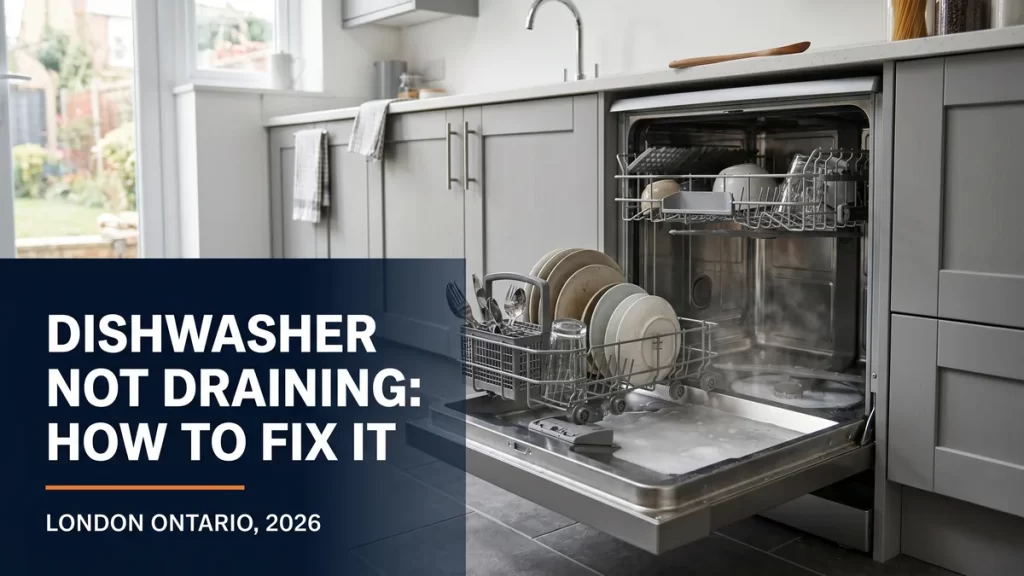
If your dishwasher is sitting full of standing water, your dishwasher is not draining for one of six reasons, and four of them you can fix in 20 minutes with no tools. A dishwasher not draining is not a sign your machine is dying. It is usually a clogged filter, a sock of grease in the drain hose, or a sink drain that quietly stopped working.
Walk through these checks in order before calling anyone. About 60 percent of dishwasher drain calls in London Ontario end up being fixes the homeowner could have done themselves once they knew what to look for. The other 40 percent need a tech, and you will know inside 10 minutes which group your machine is in.
Why a dishwasher stops draining
The drain cycle on a modern dishwasher is simple. A small pump pushes water up through a hose into your sink drain or garbage disposal. Anything that blocks that path stops the drain. The 6 things that block it, in order of how often we see them in London ON service calls:
- The filter is full of food debris. By far the most common cause, and the one most homeowners never check.
- The drain hose has a kink, a sag, or a clog. Usually behind the dishwasher where it connects to the sink.
- The sink drain or garbage disposal is partially blocked. The dishwasher cannot push water into a clogged sink.
- The drain pump is jammed. Glass, a fruit pit, or a small bone gets caught in the impeller.
- The check valve in the pump is stuck. Water cannot move past it.
- The control board failed. The drain command never reaches the pump.
The first 4 are user fixable. The last 2 need a service call. Here is exactly how to work through them.
Step 1: Get the standing water out
Before any other troubleshooting, the tub needs to be empty. Lay an old towel on the floor in front of the dishwasher to catch drips. Use a 1 cup measuring cup to bail water into the sink until the level drops below the heating element. Use a sponge for the last shallow inch.
You cannot diagnose a drain problem with the tub still flooded. The filter, hose, and pump are all under standing water. Get a dry tub before you start.
Step 2: Clean the dishwasher filter
Pull the lower rack out completely. At the bottom centre of the tub you will see a cylindrical or disc shaped filter assembly. On most Bosch, KitchenAid, and Whirlpool models, the filter twists counter clockwise (about 30 degrees) and lifts straight out. On Maytag and some GE models there is a finer mesh under the cylinder you also need to remove.
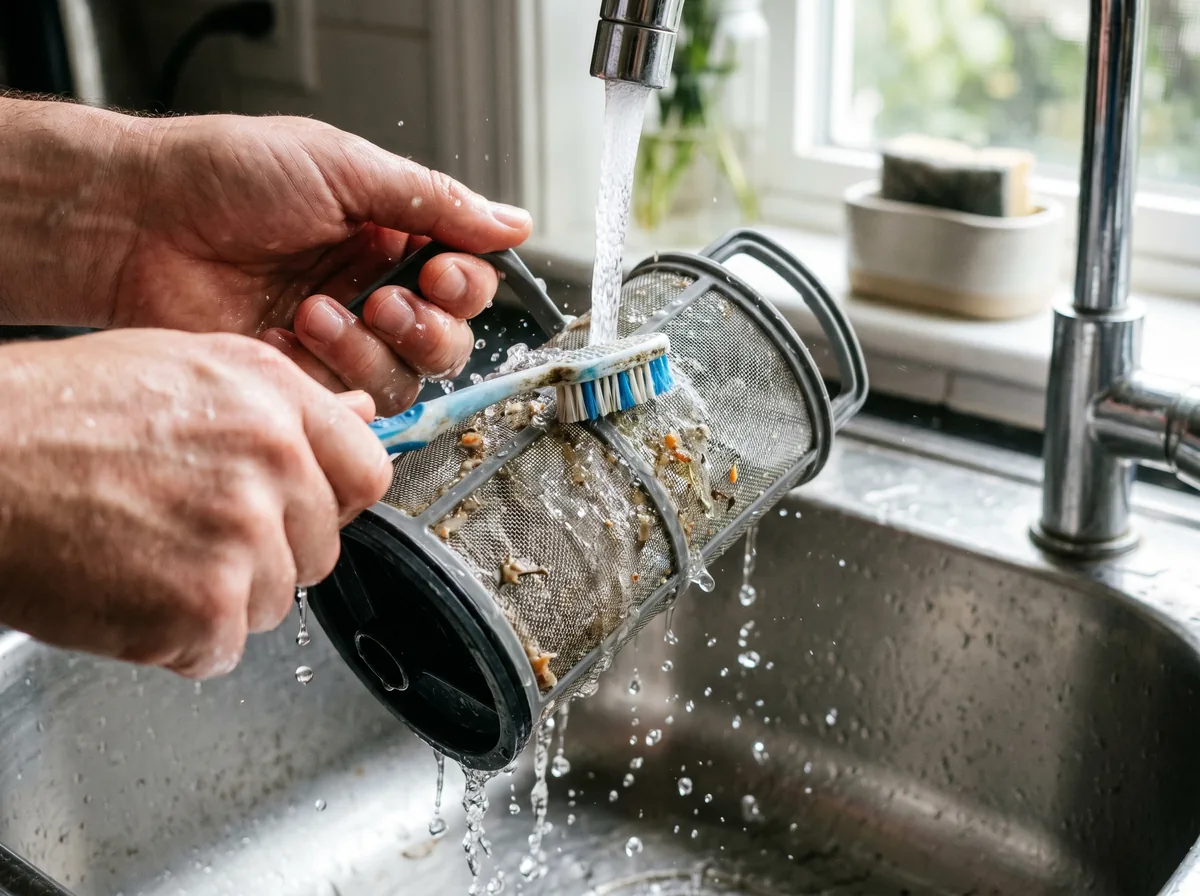
- Take the filter to the sink and rinse under hot running water.
- Use an old toothbrush and a drop of dish soap to scrub the mesh until you can see light through it.
- Inspect the sump (the well at the bottom of the tub where the filter sat). Pull out any food chunks, glass, or labels that came off jars.
- Reinstall the filter, lining up the arrow and twisting clockwise until it locks. A loose filter lets food bypass the trap and clog the pump.
This single step fixes roughly 50 percent of dishwasher not draining calls. If your filter has not been cleaned in over 6 months, this is almost certainly the cause.
People often ask: How often should I clean my dishwasher filter?
For a typical London Ontario household running 4 to 5 cycles a week, every 2 to 4 weeks. If you rinse plates before loading, every 4 to 6 weeks works. If you scrape but do not rinse, every 2 weeks. Hard water shortens that interval because mineral scale builds up faster on the mesh.
Step 3: Check the drain hose for kinks and clogs
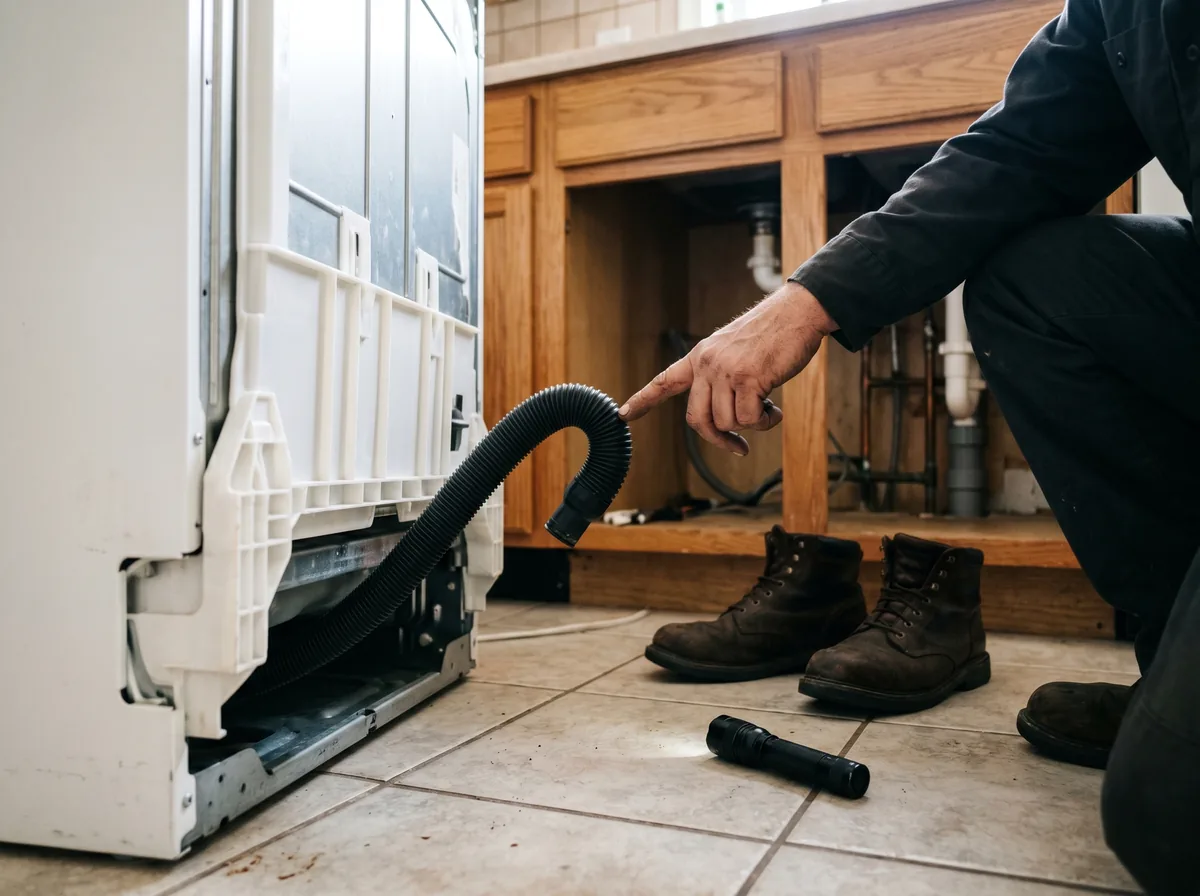
Pull the dishwasher forward about 30 cm. The drain hose is the corrugated black tube that runs from the back of the unit up to the sink area. Look for these problems:
- Sharp bend or kink. The hose should rise from the dishwasher to a high point under the sink (called the high loop) and then drop down to the disposal or air gap. A kink anywhere in this path stops drainage. Straighten any sharp bends.
- Sag in the middle. A drooping section traps water and slowly fills with grease. Use a zip tie to suspend the middle of the hose from a cabinet wall.
- Internal clog. Disconnect the hose at the sink or disposal end. Hold one end in a bucket and run a few cups of hot water through. If water trickles instead of flowing, you have a clog. A coat hanger straightened out works to fish out grease balls and food. If the clog is stubborn, replace the hose. Hoses are 30 to 60 CAD at any plumbing supply.
Step 4: Test the sink drain
Almost every Ontario dishwasher install drains into the kitchen sink line, either through a garbage disposal or directly into the sink P trap. If the sink drains slowly, the dishwasher cannot push water through.
Turn on the hot tap full blast and time how long it takes to drain a full sink. Anything over 30 seconds is a partial blockage. Pour a kettle of boiling water down the drain, then a half cup of baking soda followed by a cup of white vinegar. Wait 5 minutes and flush with hot water. If that does not clear it, you need a plumber on the sink, not a tech on the dishwasher.
If the dishwasher drains into a garbage disposal, run the disposal for 15 seconds with cold water flowing. New installs sometimes leave a knockout plug in place that blocks the dishwasher port. If you just had the disposal installed and the dishwasher has never drained, that is the cause about 1 in 4 times.
Did you know?
A new garbage disposal ships with a solid plastic plug at the dishwasher inlet. The installer is supposed to knock it out before connecting the dishwasher hose. If your dishwasher stopped draining the day a new disposal went in, that plug is almost certainly still in place. Pull the hose, knock the plug out with a screwdriver, and the drain works.
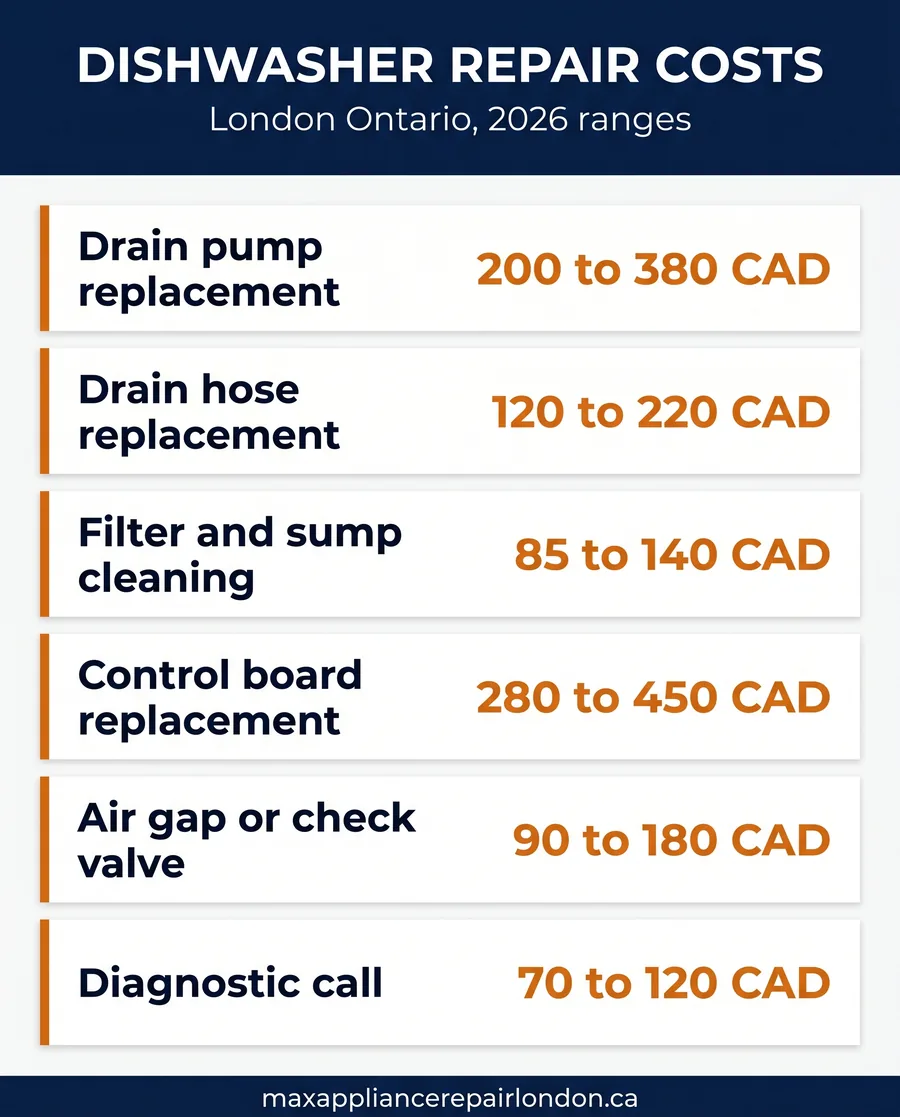
| Repair | Typical range |
|---|---|
| Drain pump replacement | 200 to 380 CAD |
| Drain hose replacement | 120 to 220 CAD |
| Filter and sump cleaning service | 85 to 140 CAD |
| Control board replacement | 280 to 450 CAD |
| Air gap or check valve repair | 90 to 180 CAD |
| Diagnostic call (London ON) | 70 to 120 CAD |
Pricing disclaimer: The cost ranges on this page are estimates based on typical London Ontario service rates as of 2026. Actual quotes vary with brand, parts availability, accessibility, and whether the service is regular or emergency. Always request a written quote before authorizing any repair work.
Step 5: Inspect the drain pump
If the filter is clean, the hose is clear, and the sink drains fine, the next suspect is the drain pump. The pump sits at the bottom of the tub and is accessible by removing the filter and the sump cover.
- Unplug the dishwasher at the breaker. Never reach into a pump with power connected.
- Remove the filter, then remove the sump cover (1 or 2 screws on most models).
- Look at the impeller. It should spin freely with a finger. If it is stuck, gently rotate it back and forth until you feel any debris release.
- Common impeller jams: a piece of glass, a fruit pit, a chicken bone, or a thick label that peeled off a jar.
If the impeller spins freely but the pump still does not engage during a drain cycle, the motor itself has failed. Replacement pumps run 200 to 380 CAD installed by a tech in the London Ontario area. The job takes 60 to 90 minutes. If your dishwasher is over 8 years old, weigh the cost against replacement.
Pro tip from the bench
Before pulling the pump apart, listen during a drain cycle. A working pump hums steadily for 60 to 90 seconds. A pump with a jammed impeller buzzes briefly then goes silent. A pump with a failed motor is silent the whole cycle. The sound tells you which problem you have before you ever pick up a screwdriver.
When the issue is electrical or the control board
If the drain pump motor itself is fine but the dishwasher never tries to drain (no hum, no buzz, no sound at all during the drain cycle), the failure is upstream. Either the door switch is bad, the control board is not sending the drain signal, or wiring inside the chassis has failed.
This is where home repair stops. The control board sits behind the door panel and works on 120 V household current. The Electrical Safety Authority of Ontario (ESA) regulates this kind of work. A new control board runs 280 to 450 CAD installed, and the diagnostic to confirm it is the right part is worth paying a tech to do. Wrong board orders are the most common reason a DIY dishwasher repair gets expensive.
Book a free repair estimate if you reach this point. Same day appointments are usually available across London ON, St. Thomas, Woodstock, and Ingersoll.
Save your money
Look for the ENERGY STAR Most Efficient label when shopping for a replacement dishwasher. ENERGY STAR Canada certified models use 30 percent less water and energy than standard machines, which adds up to roughly 60 to 100 dollars per year on a London ON utility bill. Over a 10 year lifespan, that is 600 to 1,000 dollars in savings. Worth the slightly higher upfront price.
Download the free quick guide
Save this checklist as a PDF and keep it nearby for the next time you need to walk through these steps.
Download the dishwasher drain checklist (PDF)If the pump runs and the water still stays, or the control board is the suspect, that is the point to stop and book dishwasher repair in London, Ontario. A technician can test the pump, the drain solenoid and the board in one visit.
Frequently asked questions
Why is there standing water in the bottom of my dishwasher?
Standing water means the drain cycle did not finish. The 4 most common reasons are a clogged filter, a kinked drain hose, a jammed drain pump impeller, or a backed up garbage disposal connection. Clear the filter first. That alone solves about half of all calls.
How do I clean a dishwasher filter?
Twist the cylindrical filter at the bottom of the tub counter clockwise to unlock it, lift it out, and rinse under hot tap water. Use an old toothbrush to scrub stuck on food and grease from the mesh. Reinstall the filter and turn it clockwise until it locks. Most manufacturers recommend cleaning the filter every 2 to 4 weeks. In hard water areas of London ON it should be every 2 weeks.
Can I run a dishwasher while it has standing water?
No. Bail out the standing water first with a measuring cup, then a sponge for the last bit. Running a wash cycle on top of standing water guarantees the next cycle will fail too, and may overflow onto your floor. Always start a drain repair with a dry tub.
Why does my dishwasher drain into the sink?
Almost every modern dishwasher in Ontario shares a drain line with the kitchen sink. If the sink drain is partially blocked, the dishwasher cannot push water through. Run hot water down the sink for 60 seconds, then try the dishwasher again. If that fixes it, the sink drain needs attention next.
How much does a dishwasher drain repair cost in London Ontario?
A clogged filter or hose is a free home fix. A drain pump replacement runs 200 to 380 CAD installed in the London ON area. A complete control board failure runs 280 to 450 CAD. Diagnostic calls in Woodstock, Ingersoll, and St. Thomas typically run 70 to 120 CAD and the fee is usually credited toward the repair.
Is it worth fixing a dishwasher older than 8 years?
Most residential dishwashers last 9 to 12 years. If the drain pump or control board fails on a 10 plus year old unit and the quote is over 50 percent of a new replacement, replacement is the smarter financial call. Under 50 percent, a single repair is usually worth it.
Keep reading
When the home fixes are not enough, book a same day free dishwasher repair with us. We cover London, ON Ingersoll, St. Thomas, and Woodstock with same-day appointments and a 100 percent satisfaction guarantee.
