
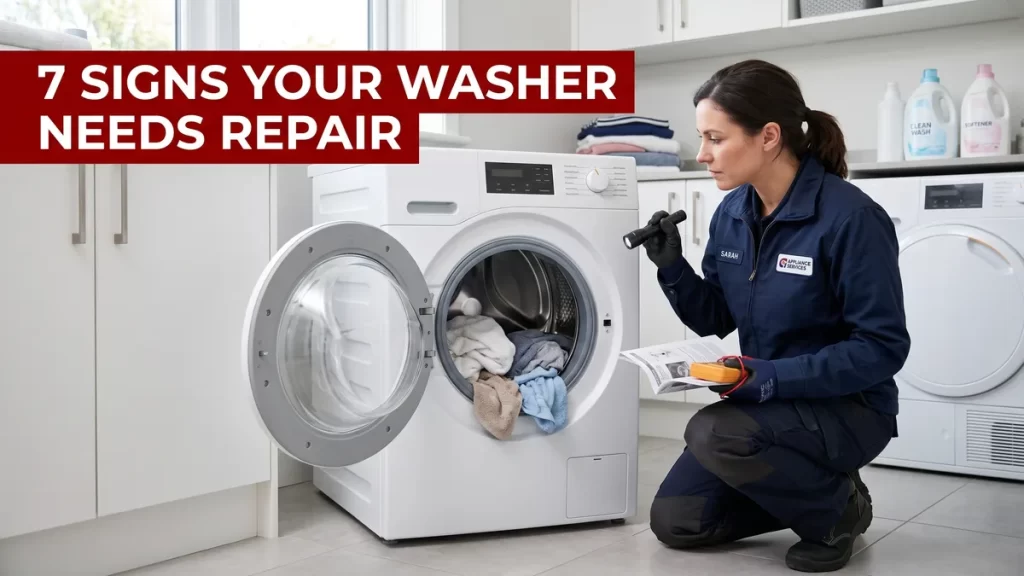
A washing machine that’s heading toward failure gives you warning signs weeks before it actually breaks down. Catching them early typically cuts the repair bill in half compared to calling after the machine floods the laundry room or stops mid-cycle with wet clothes inside. If you’re in Woodstock, Ontario and your washer is showing any of the signs below, a professional diagnosis is worth the cost of the service call.
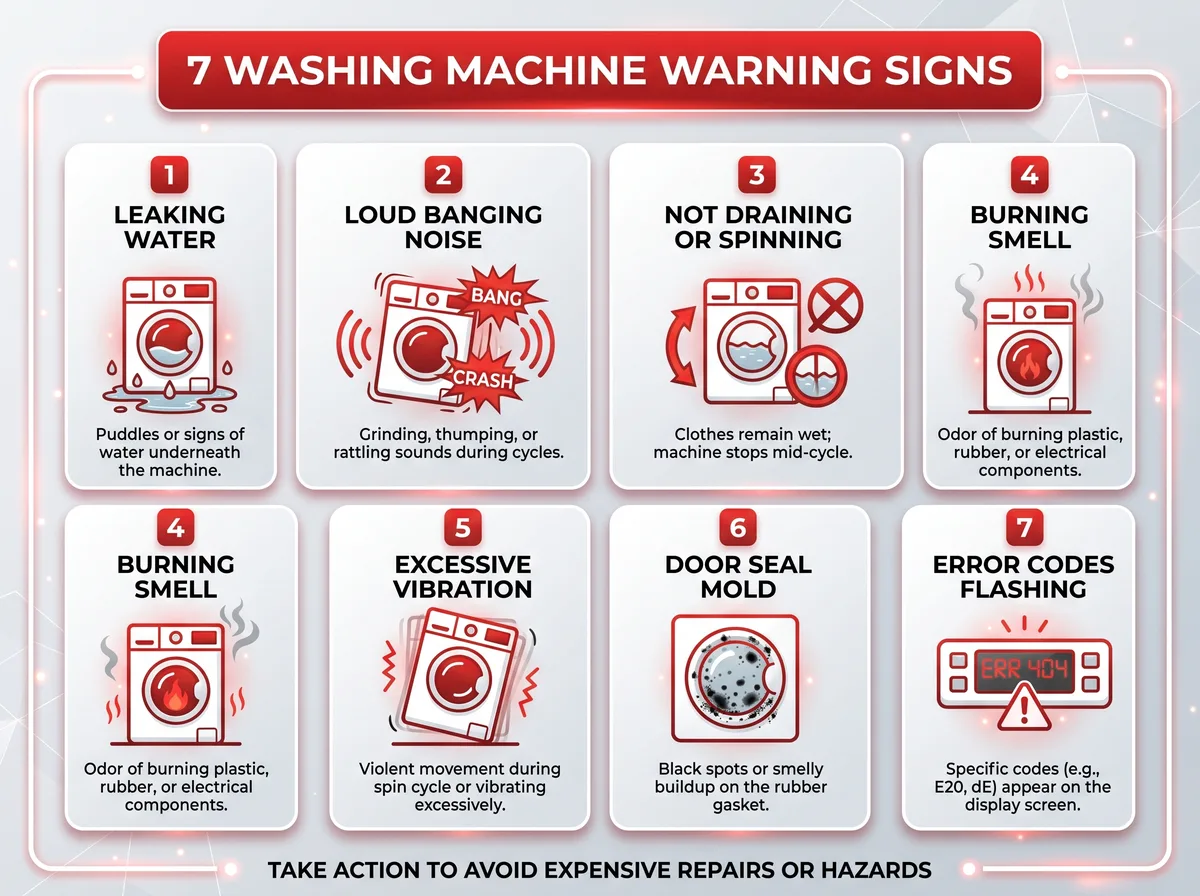
Here are the seven warning signs that mean your washing machine needs a repair technician, not just a cleaning or a reset.
💡 Did you know
According to industry repair data, washing machine pump failures are the most common reason for service calls in Canadian homes, accounting for roughly 30 percent of all washer repairs. Most pump failures are preceded by drainage noise changes and slower drain times weeks before the complete failure.
Sign 1: It’s leaking water onto the floor
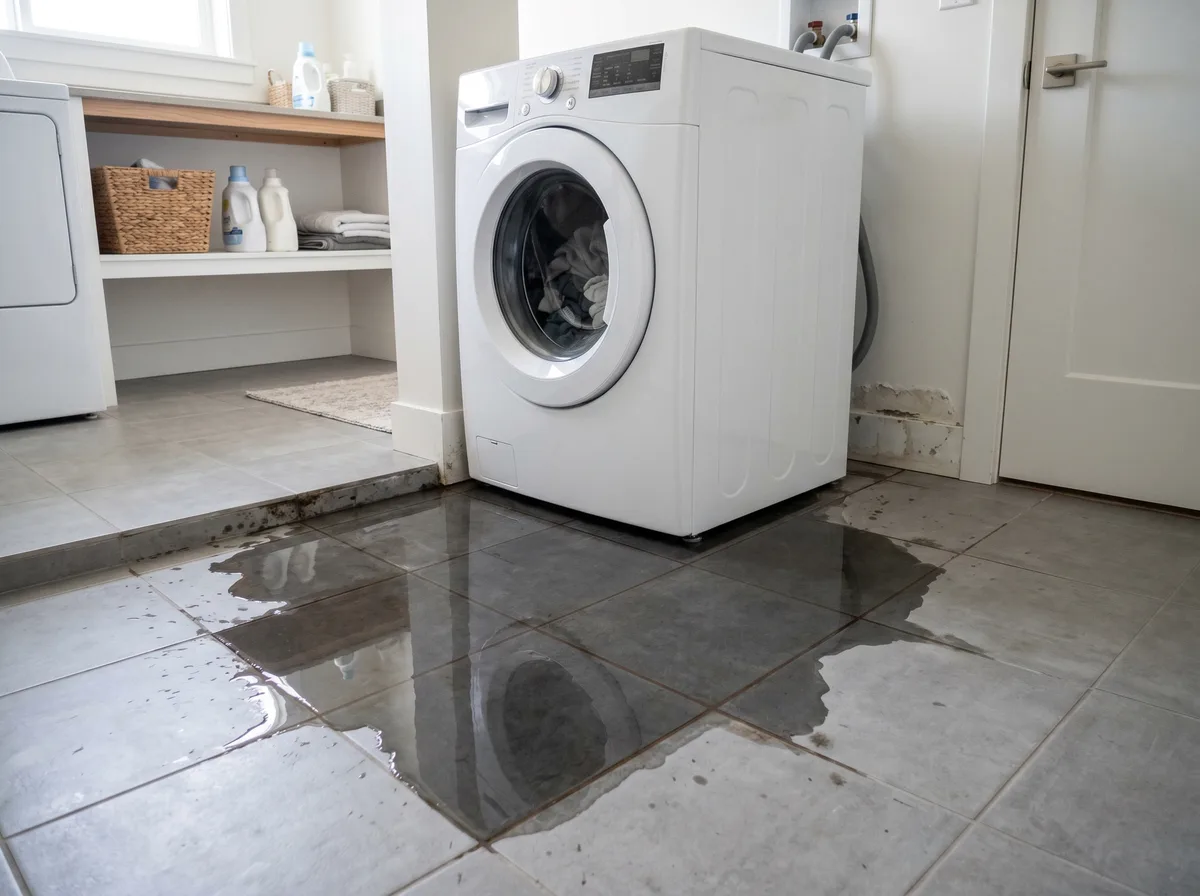
Any visible water on the floor during or after a wash cycle is a problem. The source matters for diagnosis: water at the front usually points to the door boot seal (the rubber gasket around the door opening on front-loaders) or the door latch. Water at the back suggests a loose or cracked hose. Water pooling under the machine points to the drain pump or its filter connection. Do not ignore small leaks: they damage flooring, encourage mold growth in the laundry room, and tend to get worse quickly.
Sign 2: Loud banging or grinding during the spin cycle
Occasional banging from an unbalanced load is normal. Consistent banging with a balanced load is not. The most likely causes are worn drum bearings (which produce a grinding or rumbling sound that gets louder over time) or a broken drum spider (the metal bracket that holds the drum, more common on front-loaders). Both of these will destroy the machine if left long enough. Drum bearing replacements in Ontario typically run $180 to $300 depending on the brand and model. Catching this at the rumbling stage, before the bearing seizes, saves significantly.
Sign 3: The drum won’t drain or spin
A drum that fills but won’t drain points to a clogged drain pump filter or a failed pump. Front-loader filters should be cleaned every 3 to 6 months. You’ll find them behind a small access panel at the bottom front of the machine. A DIY clean takes about 5 minutes and resolves the problem in many cases. If the filter is clean and the machine still won’t drain, the pump itself is failing. Pump replacements run $120 to $180 installed in most Woodstock area shops. A drum that fills, drains, but won’t spin points to the motor, lid switch, or control board instead.
Sign 4: A burning smell during the cycle
Any burning smell is a red flag. Stop the machine immediately and unplug it. Do not restart it until a technician has inspected it. The smell usually means one of three things: the motor has overheated, the drive belt is slipping or burning against the pulley, or an electrical component has shorted out. All three are genuine safety risks. The belt and motor are replaceable, and if caught early, the cost is reasonable. An electrical short that involves the control board is the most expensive outcome, typically $200 to $400 to resolve on most residential front-loaders.
Sign 5: Excessive vibration that moves the machine
All washing machines vibrate during the spin cycle, but the machine should stay in one place. A washer that walks across the floor, shakes the surrounding cabinetry, or vibrates loudly enough to be heard throughout the house has a mechanical problem beyond leveling adjustment. Common causes include worn shock absorbers (the dampeners that control drum movement on front-loaders), a broken suspension spring, or drum bearing wear. A machine that vibrates severely also damages its own internal components through repeated stress, accelerating other failures.
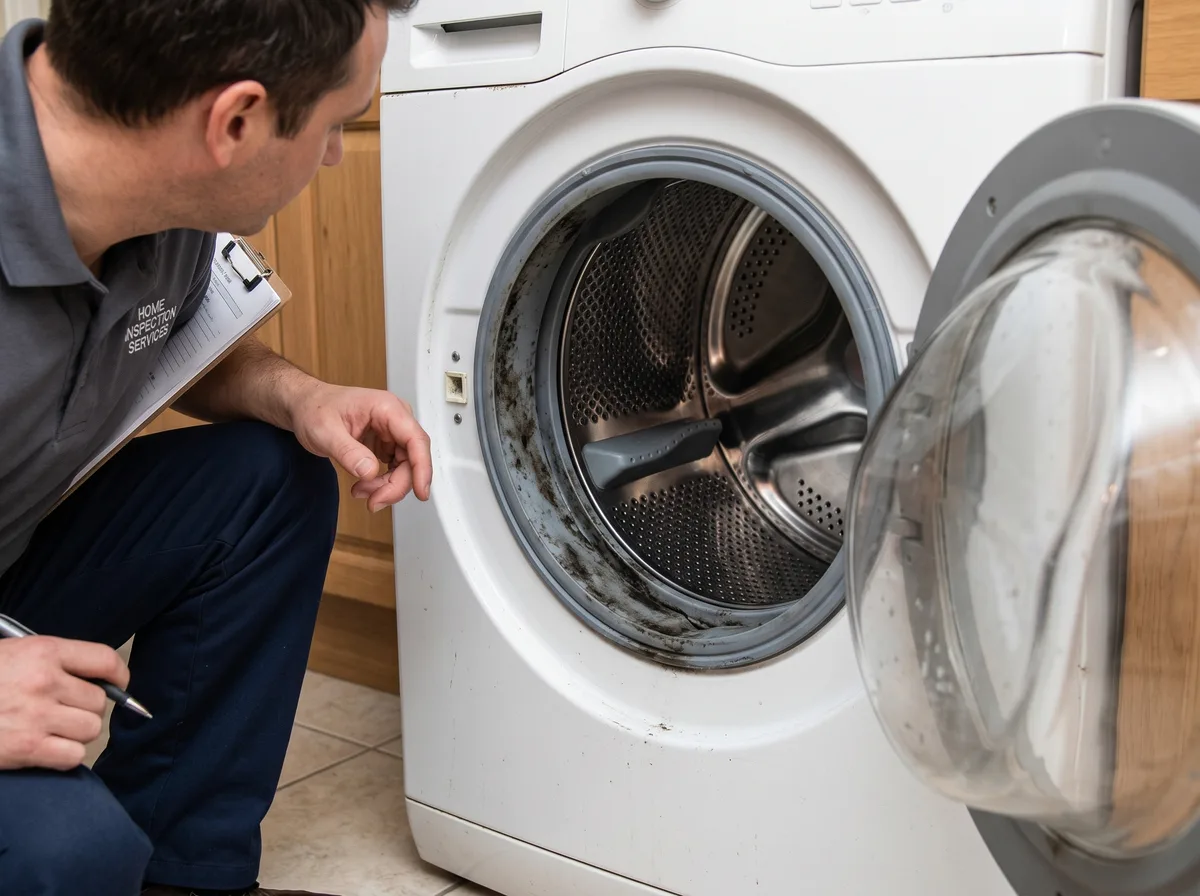
Sign 6: Mold on the door seal
The rubber gasket around the door opening on front-loaders is a notorious mold trap. Small black spots on the seal are a maintenance issue that you can address with a diluted bleach solution. But a seal that has visible tears, cracks, or deep mold penetration into the rubber needs replacement. A torn boot seal leads to water leaks, and once water starts getting into the machine’s door mechanism regularly, you’re looking at accelerating damage to the door switch and latch. Boot seal replacement runs $80 to $140 at most local shops.
🚨 Red flag
A burning smell during any washer cycle is a stop-everything signal. Unplug the machine immediately. Do not restart it until a technician has confirmed the source. The causes range from a seized motor to an electrical short, and neither is safe to ignore.
Sign 7: Persistent error codes
Modern washers display error codes for a reason: they’re telling you exactly what the machine detected as wrong. A code that appears once, clears on reset, and never returns is usually just a communication glitch. A code that comes back after every reset, or appears mid-cycle, is the machine telling you it has a real problem. Common codes include drain errors (E3, F21, etc.), door latch errors (F8 E1 on Whirlpool), and motor communication errors. Look up your model’s error code in the manual or the manufacturer’s support site before calling a tech. Walking in with the code already noted saves time and reduces the service call cost.
🔧 Pro tip
Front-load washer pump filters should be cleaned every 3 months. You’ll find the access panel at the bottom front of the machine. Have a shallow dish and towels ready: a small amount of water will drain when you open the filter cap. This 5-minute maintenance step prevents roughly half of all E drain error codes.
When DIY ends and the technician starts
Cleaning a drain filter, leveling the machine, or rinsing the door seal: these are maintenance tasks any homeowner can handle. But once a washer is leaking, grinding, burning, or throwing consistent error codes, a technician’s diagnosis is the better investment. The cost of a proper service call in the Woodstock area typically runs $60 to $80, and that amount is usually applied to the repair. Guessing and ordering the wrong parts costs more in the end.
Washing machine repair in Woodstock and London area
Max Appliance Repair London sends qualified technicians to Woodstock, Ingersoll, and across the London area for washer repairs. Most diagnoses and repairs are completed same-day or next-day. If your machine is making any of the sounds or showing any of the signs above, an early call is the lowest-cost way to handle it.
Sources and references
- Natural Resources Canada – Clothes washer energy efficiency
- ENERGY STAR Canada – Certified washing machines
- Consumer Reports – Washing machine reliability data 2024
Disclaimer
This article is for general guidance only. Costs, products, regulations, and best practices change. Always confirm with a licensed professional for your specific situation, especially for any work involving gas appliances.
