


A dishwasher white film on glasses almost always comes down to hard water minerals, a rinse aid issue, or permanent etching. If you notice your dishwasher leaving white residue after a cycle, the first two causes can be fixed at home in minutes. The third is permanent, which is why identifying the root cause matters before you start scrubbing. If your machine is also failing to clean dishes, our local technicians provide professional dishwasher repair to resolve white film on glasses and restore performance.
Here is how to test your glassware at the sink, diagnose why your dishwasher is leaving white residue, and apply the right fix.
Film or etching? Run this test first
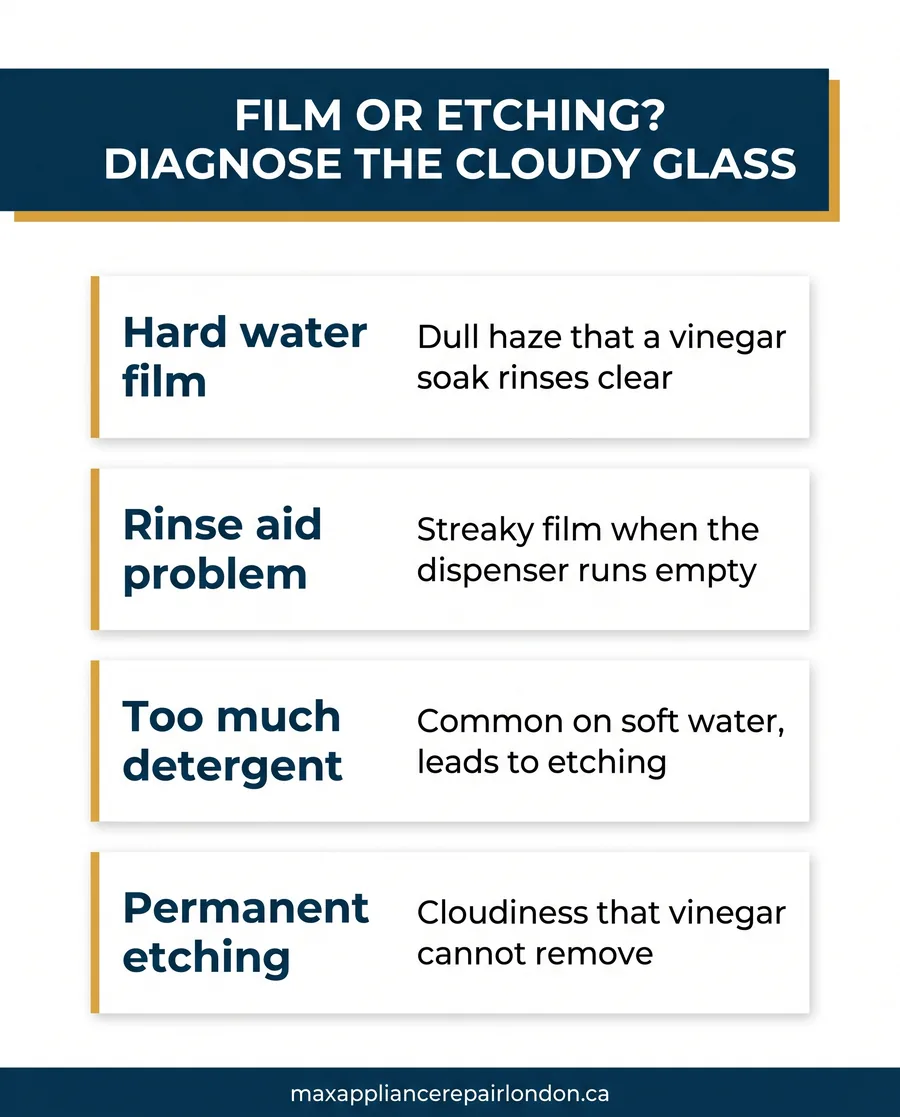
Before changing settings, determine if the cloudiness can be removed. Soak a cloudy glass in plain white vinegar for five minutes and rinse it. If the glass clears up, you are dealing with mineral scale or soap buildup. If the haze remains, the glass is etched, meaning microscopic surface damage that cannot be polished away.
Etching usually happens when soft water combines with excess detergent over high-heat cycles. Testing first prevents wasted effort trying to scrub permanent glass damage.
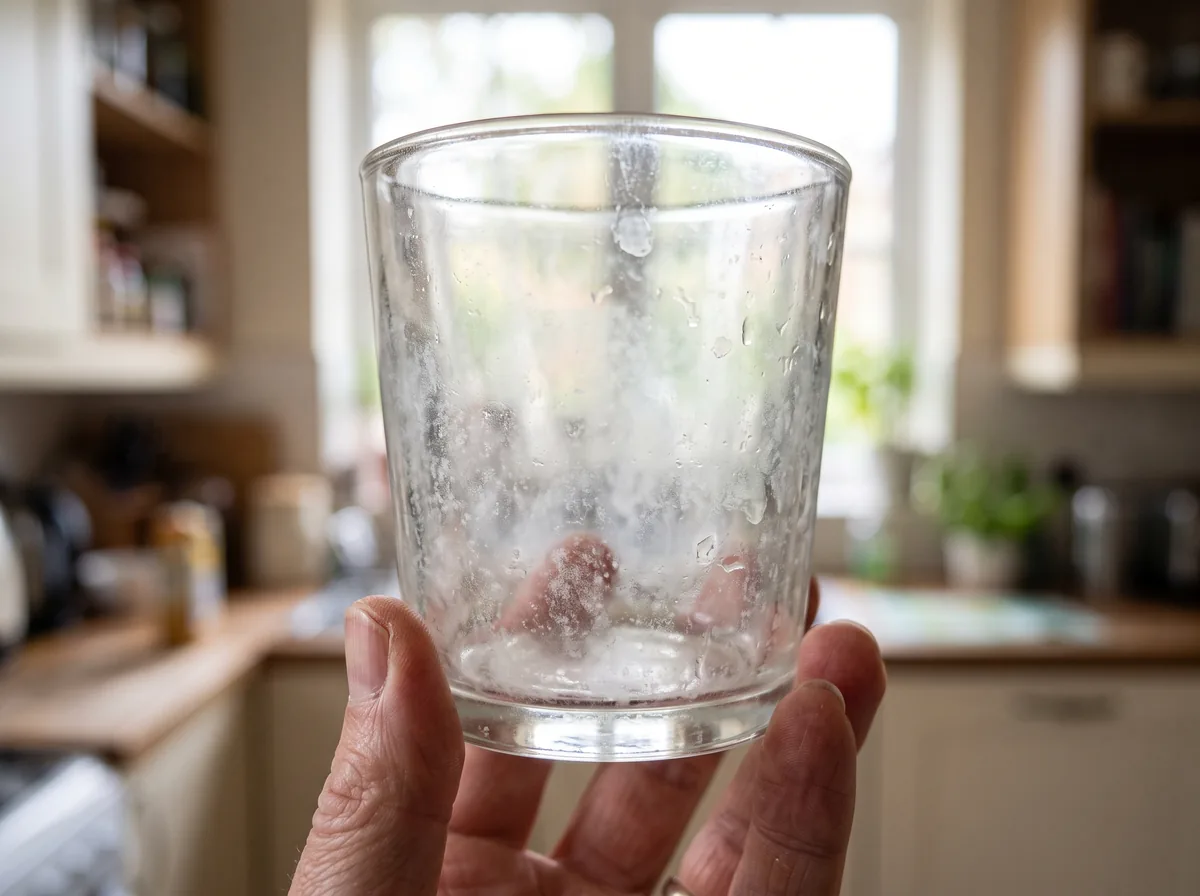
Why is your dishwasher leaving a white film on glasses?
Hard water contains dissolved calcium and magnesium. When rinse water dries, these minerals settle onto glass as a white film. If you notice your dishwasher leaving white residue across multiple loads, hard water is often the primary cause.
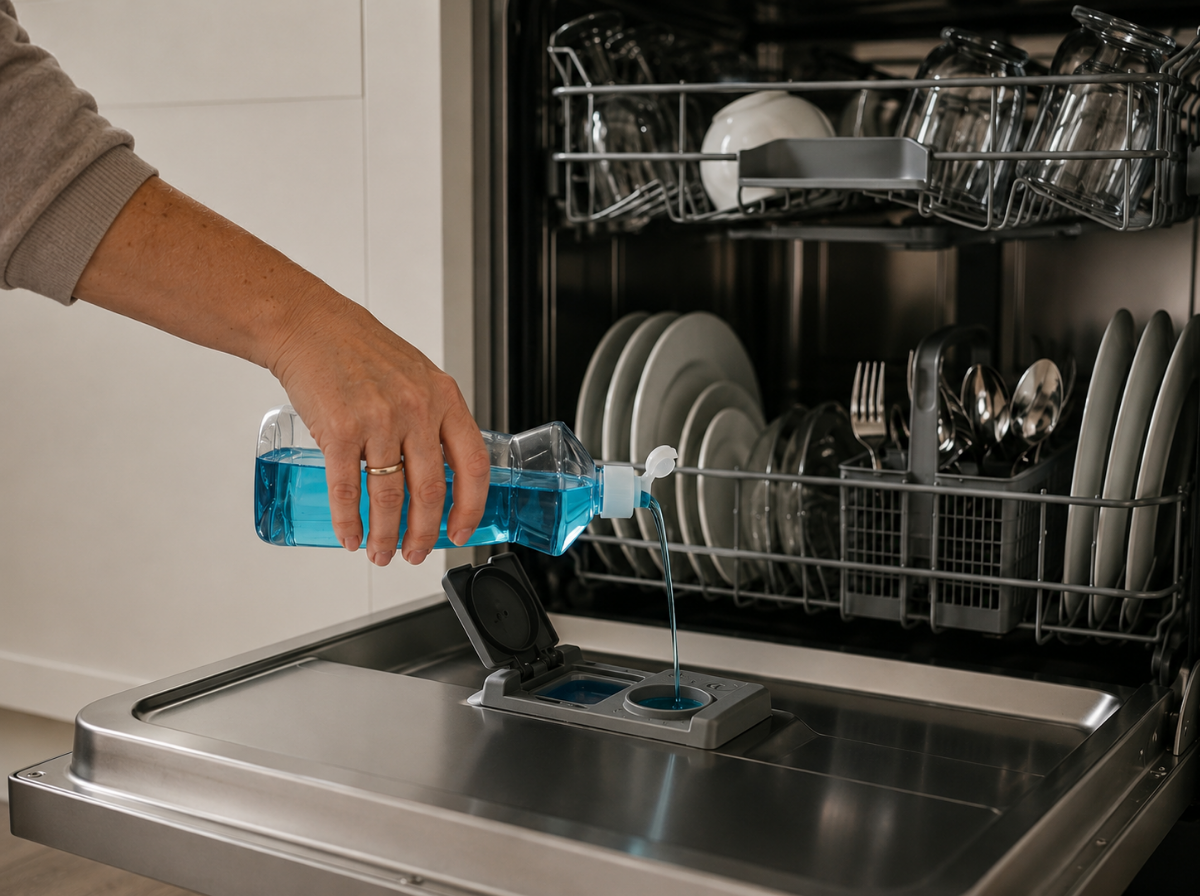
Rinse aid lowers water surface tension so moisture sheets off glasses instead of evaporating into spots. Skipping rinse aid or using incorrect detergent doses will leave persistent mineral residue behind.
Match the residue to the cause
Different types of white film point to specific issues with your water, detergent, or appliance.
| What you see | Likely cause | Quick test | The fix |
|---|---|---|---|
| Cloudy haze that rinses off | Hard water minerals | Vinegar soak clears glass | Increase rinse aid, adjust detergent dose |
| Chalky film on occasional loads | Under-dosed or old detergent | Check detergent freshness | Use fresh detergent and hotter cycles |
| Streaky film on all items | Empty or blocked rinse aid dispenser | Check rinse aid window | Refill rinse aid, clean dispenser door |
| Permanent cloudiness | Glass etching | Vinegar soak makes no difference | Reduce detergent, lower cycle temp |
| Dishwasher leaving white residue + dirty dishes | Clogged spray arms or filter | Inspect filter and spray arm nozzles | Clean filter and spray arms |
How to clear the film and keep it gone
- Run a maintenance wash: Place a cup of white vinegar on the top rack and run a hot cycle empty to strip mineral scale.
- Refill rinse aid: Keep the dispenser full and turn the dosage setting up if you have hard water.
- Adjust detergent dosage: Match detergent amounts to your water hardness to stop dishwasher leaving white residue issues.
- Clean the filter and spray arms: Rinse the bottom mesh filter and clear spray arm holes with a toothpick.
- Load correctly: Keep glassware spaced out so wash jets can rinse all surfaces thoroughly.
Pro tip
If you use a home water softener, reduce detergent amounts. Combining soft water with full detergent doses causes permanent etching on glasses.
When it is the machine, not the water
If maintaining rinse aid, cleaning filters, and adjusting detergent does not work, internal components may be failing. Faulty heating elements, weak wash pumps, or failing water inlet valves prevent proper rinsing, leading to persistent white film on glassware.
Our team provides complete diagnostics and repair services across London and nearby regions. Learn more about our regional coverage through our St. Thomas appliance repair services.
Can hard water damage your dishwasher?
Yes. Mineral scale builds up on heating elements, spray arms, and internal pumps over time, reducing cleaning performance and causing white residue on glasses.
Download the free quick guide
A printable checklist to diagnose and fix cloudy glassware issues.
Frequently Asked Questions
If your dishwasher leaves white residue or fails to clean properly, Max Appliance Repair London can help. We provide expert diagnostics and repairs across St. Thomas, Ingersoll, and London. Contact our team today for professional appliance service.
