
The short answer to the gas vs electric dryer Canada question comes down to what your Woodstock laundry room is already wired and plumbed for. If you have a gas line and a vent, a gas dryer costs a little more up front and less to run. If you only have a 240-volt outlet, electric is the simpler choice. Either way, the machine you pick is one you will live with for a decade, so it pays to match it to your home before you buy or book a dryer repair in Woodstock.
Both types get clothes dry. The real differences are the hookups your home needs, what each costs to run through an Ontario winter, and the safety rules that come with burning gas indoors. Here is how they stack up for a local home.
The bottom line up front
Most Woodstock homeowners are not choosing in a vacuum. Your laundry room already has either a gas line and a dryer vent, or a 240-volt electric outlet, and that existing setup usually makes the decision for you. Changing from one to the other means paying a licensed tradesperson to run a new line, which can swallow any savings the appliance itself offers.
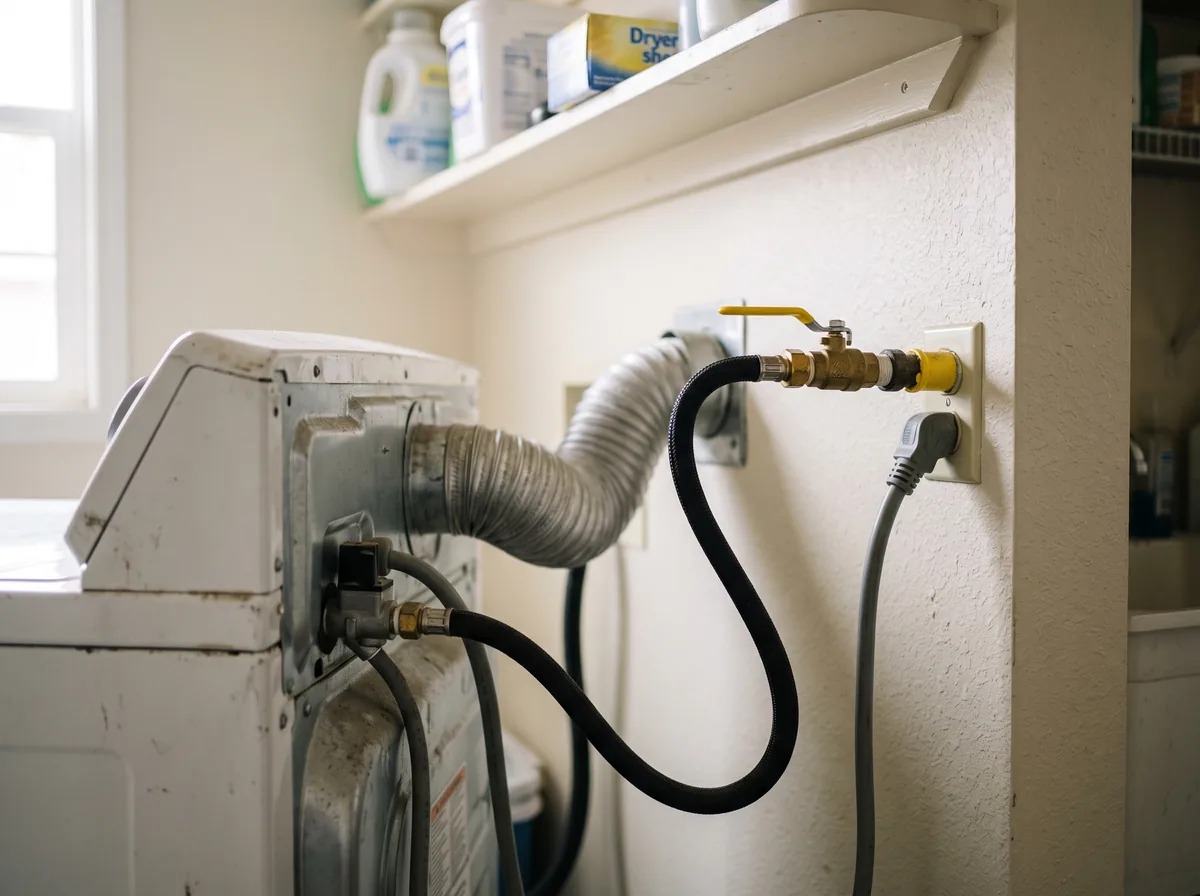
So the first thing to do is look behind your current dryer. If you spot a yellow-tipped shutoff valve and a black flexible connector, you have gas. If you see only a large four-prong or three-prong outlet, you have electric. Start there, then weigh the running costs and comfort factors below.
Quick take
Match the dryer to the hookup you already have. A gas dryer on a home with no gas line, or an electric dryer where the panel cannot spare a 240-volt circuit, turns a simple purchase into a costly renovation. Check behind the machine first.
Gas vs electric dryer Canada comparison
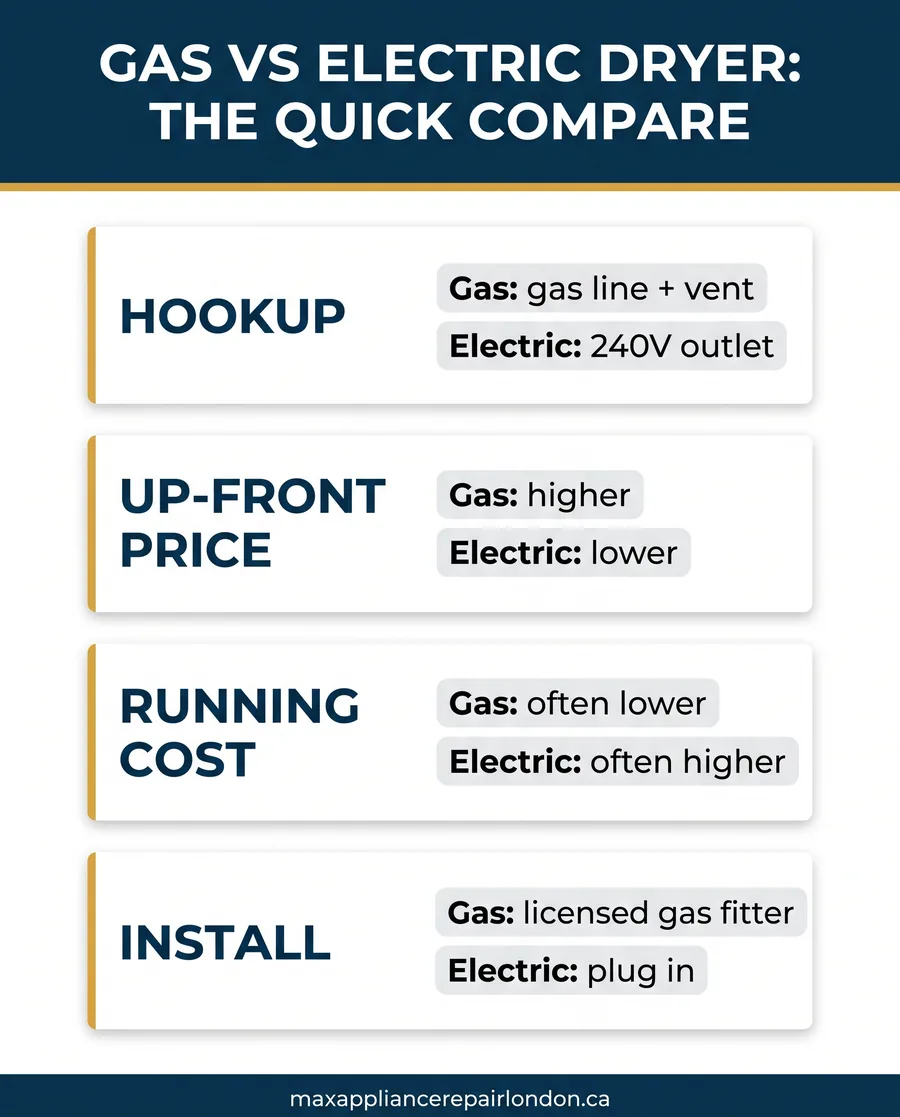
Here is how the two compare on the factors that actually matter to a Canadian household. Purchase prices and running costs are broad ranges, since they shift with the model, your local rates, and how much laundry you do.
| Factor | Gas dryer | Electric dryer |
|---|---|---|
| Purchase price | Typically higher for a comparable model | Usually the lower sticker price |
| Hookup needed | Gas line, 120-volt outlet, and a vent | 240-volt outlet and a vent (or ventless) |
| Install | Licensed gas fitter for the gas line | Plug in, or an electrician for a new circuit |
| Running cost | Often lower per load where gas is cheaper than power | Higher per load in most Ontario markets |
| Dry time | Heats fast, can dry a load a little quicker | Slightly slower to heat up |
| Safety notes | Combustion, needs proper venting and checks | No combustion, but a heavy electrical draw |
| Best for | Homes with an existing gas line and heavy laundry | Homes without gas, or lighter laundry loads |
What your Woodstock home is set up for
The hookup is the deciding factor for most people, so it is worth understanding what each dryer needs. A gas dryer still plugs into a standard 120-volt outlet to run its motor and controls, but it burns natural gas to make heat, so it needs a gas supply line with a shutoff valve and a proper vent to the outside. An electric dryer skips the gas and draws all its heat from a dedicated 240-volt circuit.
If your home does not already have the right connection, adding one is not a weekend project. A new gas line means a licensed gas fitter. A new 240-volt circuit means an electrician and possibly panel space you may not have. In an older Woodstock home with a full electrical panel, that upgrade alone can cost more than the price gap between the two dryers.
Running cost through an Ontario winter
Where a gas line already exists, a gas dryer usually costs less per load to run, because natural gas has often been cheaper than electricity for producing heat in Ontario. The gap is not huge on a single load, but across a family’s weekly laundry over a Woodstock winter, it adds up. Electric dryers cost a little more per load in most local markets, though heat pump electric models have narrowed that gap by using far less power.
The bigger lever on your bill is not the fuel type at all. It is how efficiently the machine and vent are working. A clogged vent, a worn seal, or a failing heating element makes any dryer run long extra minutes on every load. For real efficiency guidance on major appliances, the ENERGY STAR Canada program from Natural Resources Canada is a solid, independent reference.
Gas dryers and the safety rules
A gas dryer is safe when it is installed and maintained properly, but it carries responsibilities an electric dryer does not. It burns natural gas, which produces carbon monoxide, and it must be vented fully to the outside so those combustion gases leave the house. A blocked or disconnected vent is a genuine hazard, not just an efficiency problem.
- Only ever have a licensed gas fitter connect or move a gas dryer. Fuel work is regulated for a reason.
- Keep a working carbon monoxide alarm near the laundry area and test it regularly.
- Never vent a gas dryer indoors or into an attic. It must exhaust to the outside.
- If you smell gas, do not operate the dryer, switches, plugs or gas valves. Leave immediately and call the gas utility or emergency services from outside.
In Ontario, fuel safety is overseen by the Technical Standards and Safety Authority (TSSA), which is why gas dryer hookups are a licensed job and not a homeowner one.
Which one is right for your home
If your laundry room already has a gas line and you do a lot of laundry, a gas dryer is usually the better long-term value. It dries a little faster and often costs less per load. If you have no gas line, or you do lighter laundry, an electric dryer is the simpler, lower-cost choice, and a heat pump electric model is worth a look if efficiency is your priority. For most Woodstock homes, the honest answer is to buy whatever matches your existing hookup and put the money you save toward a good, efficient machine rather than a new fuel line.
Download the free quick guide
A one-page decision guide to choose between a gas and electric dryer based on your home’s hookups and needs.
Frequently Asked Questions
Whichever dryer you run, Max Appliance Repair London keeps gas and electric machines going across Woodstock, London, and St. Thomas. Book a dryer service and we will diagnose the fault, check the vent, and get your laundry moving again.
